


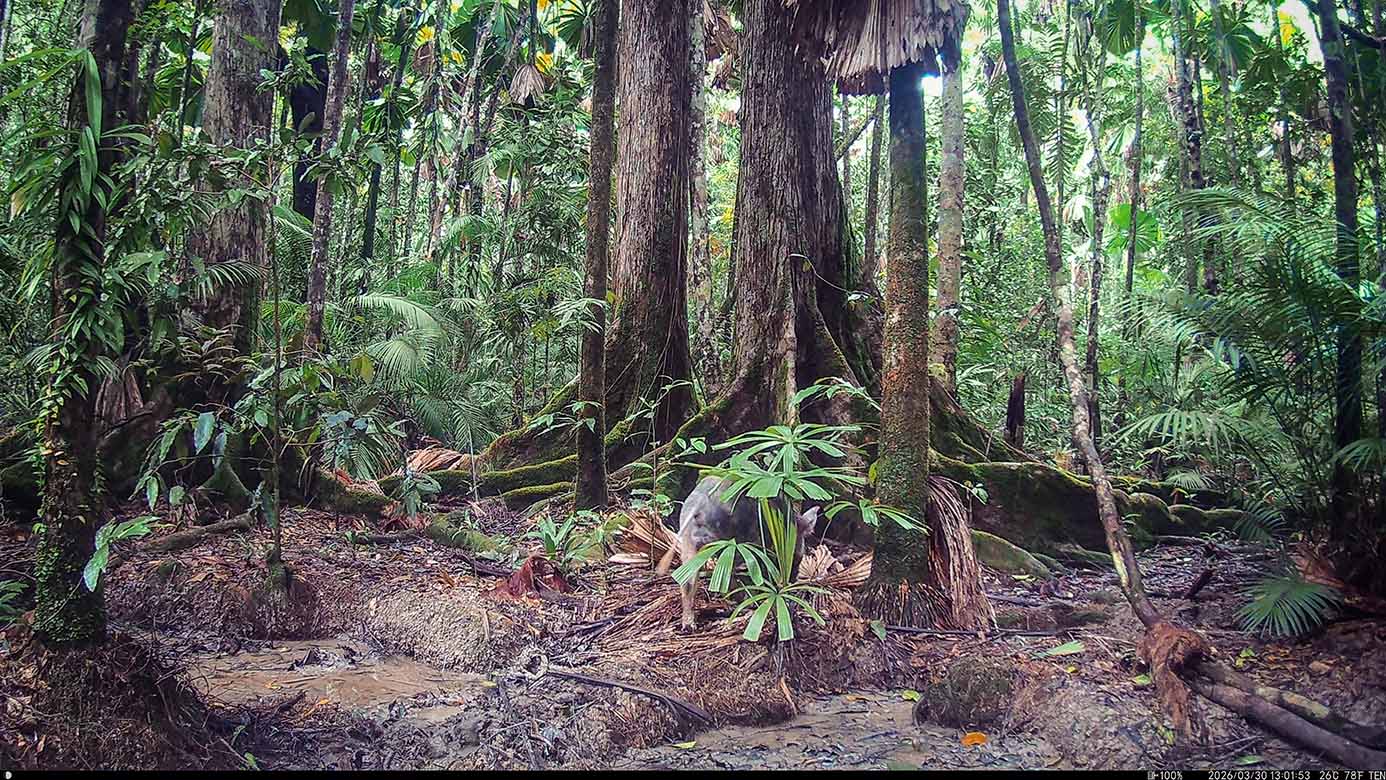
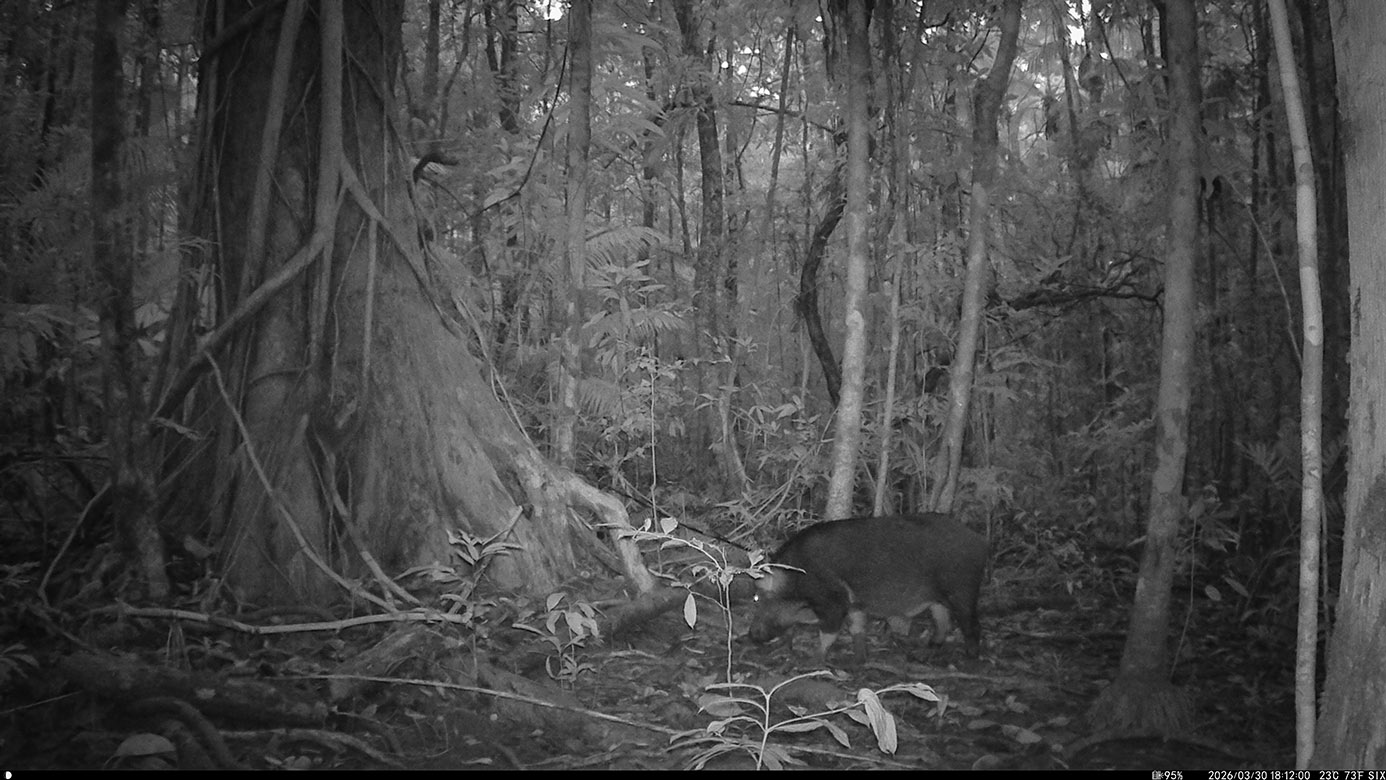
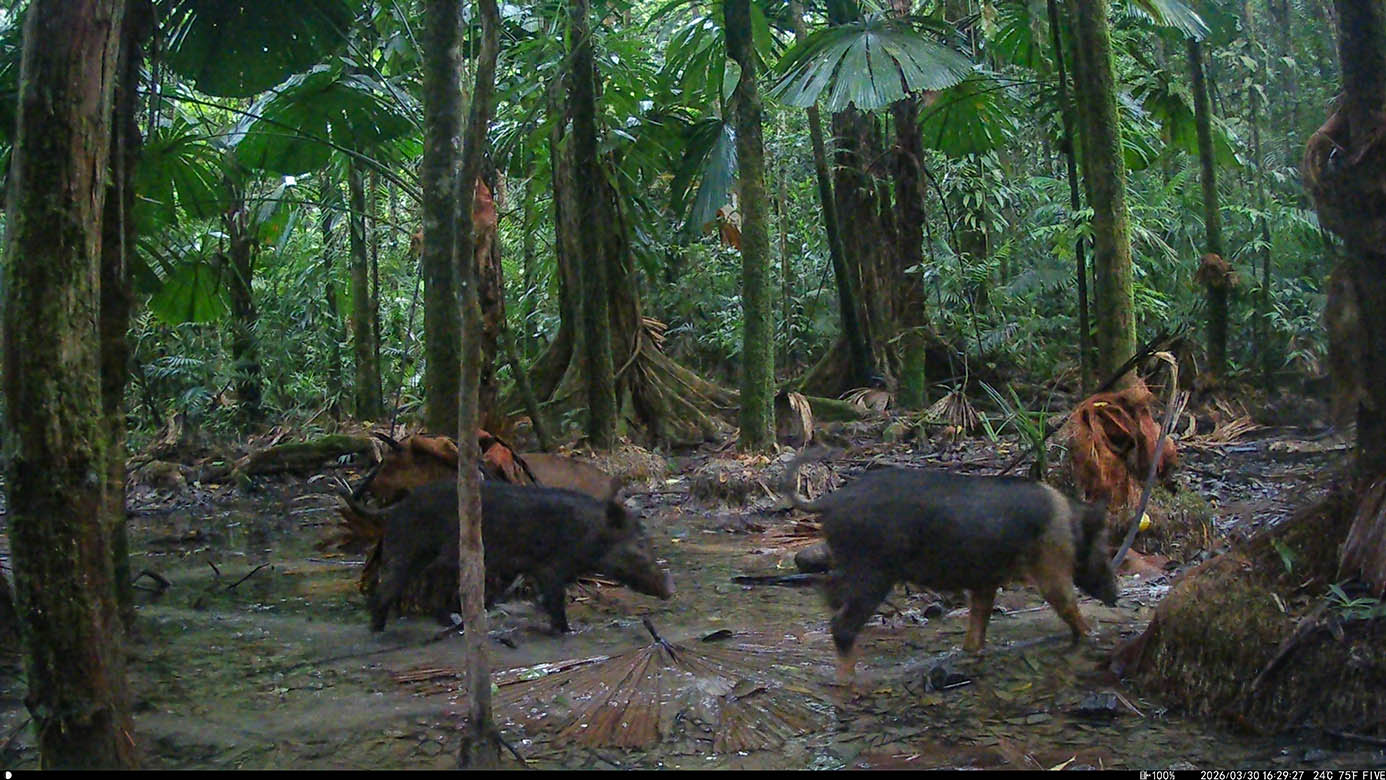
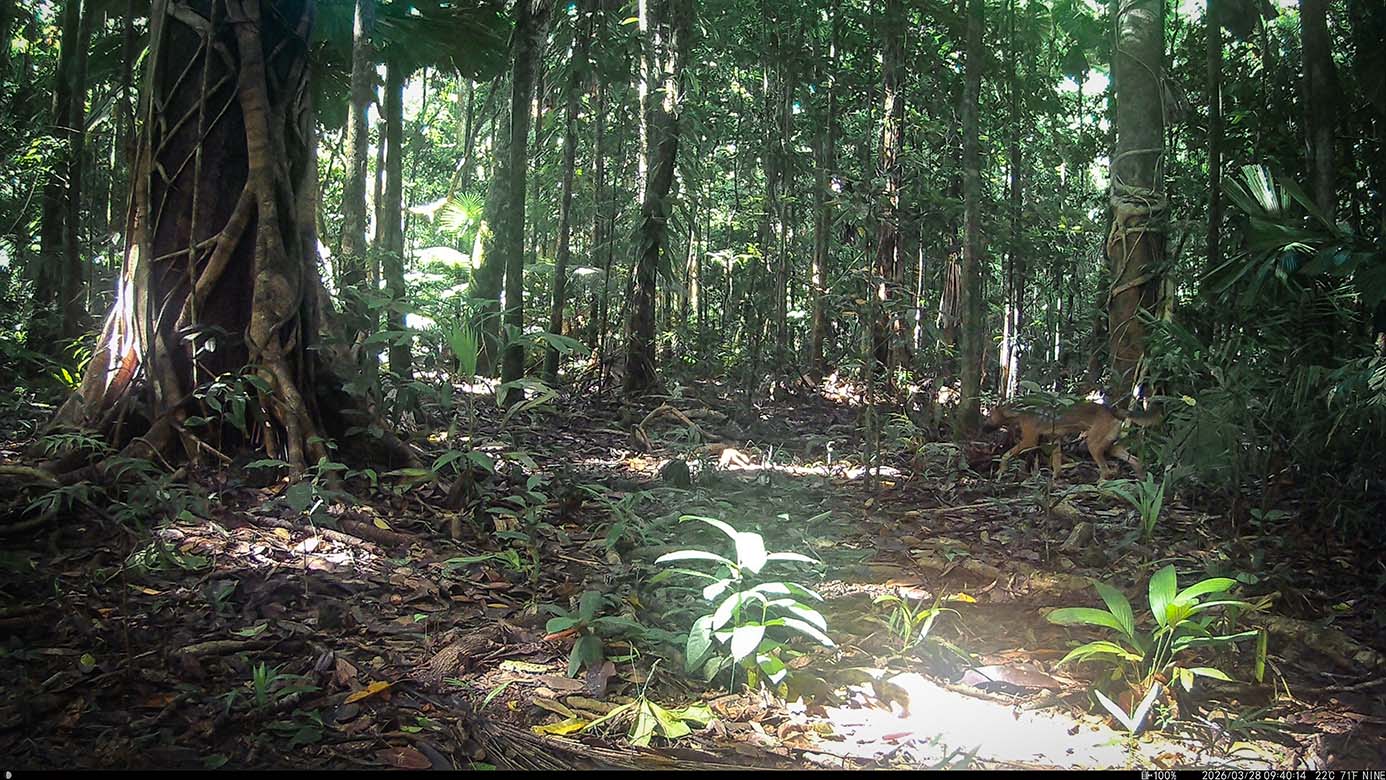
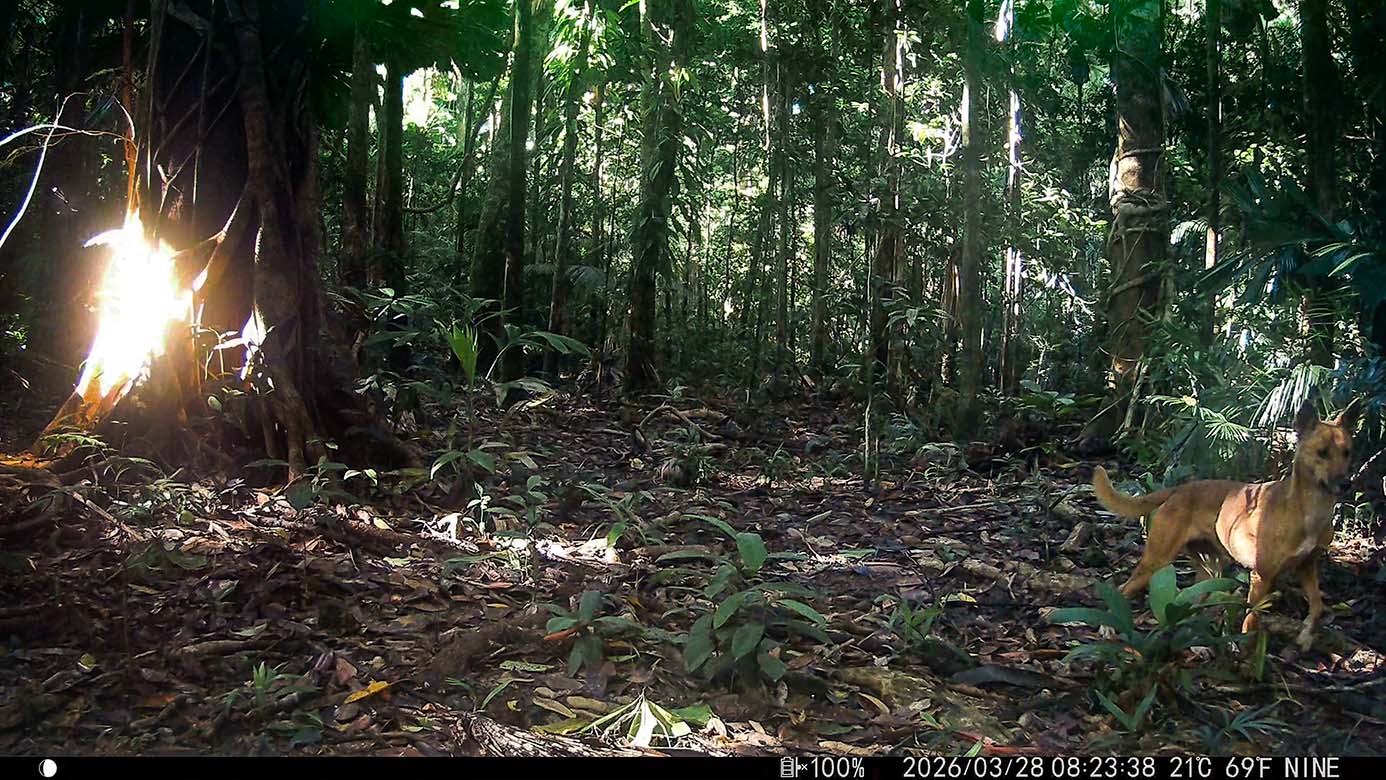
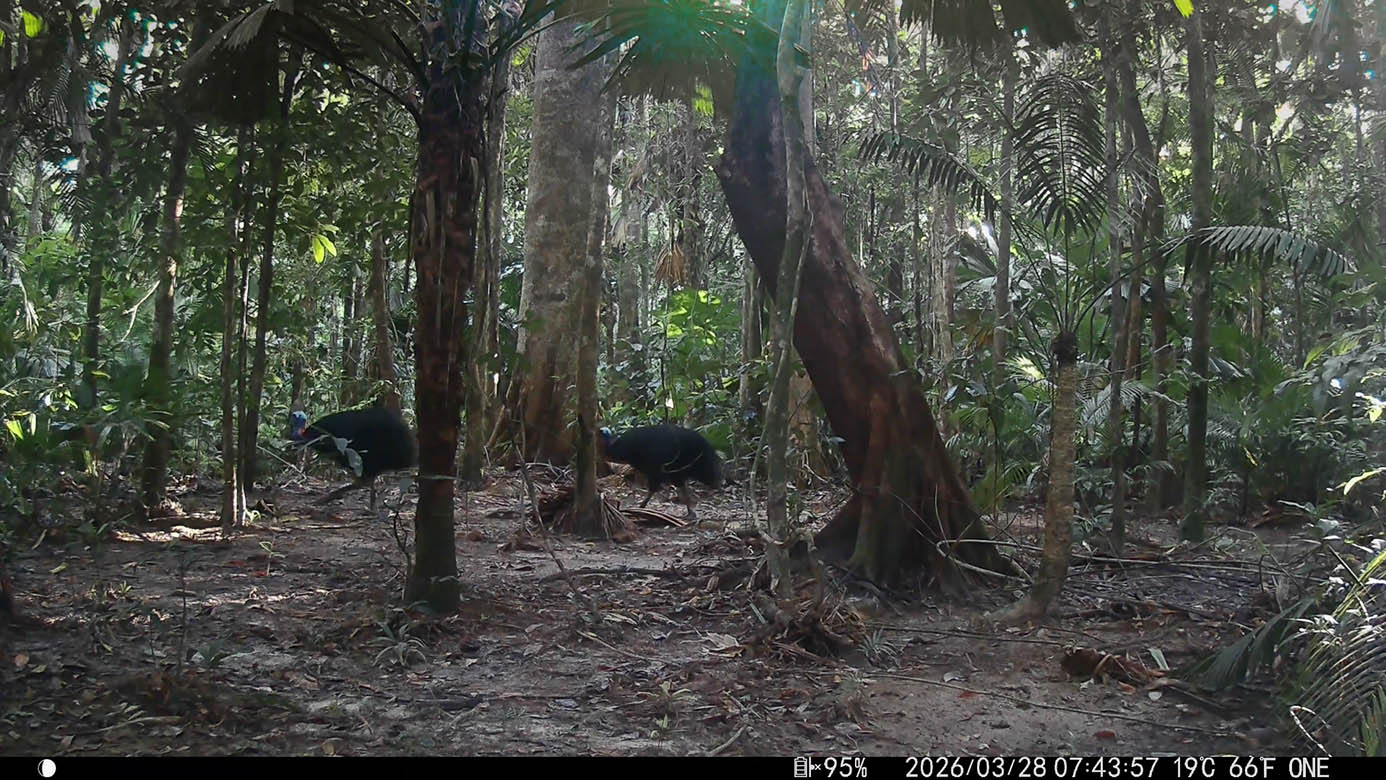
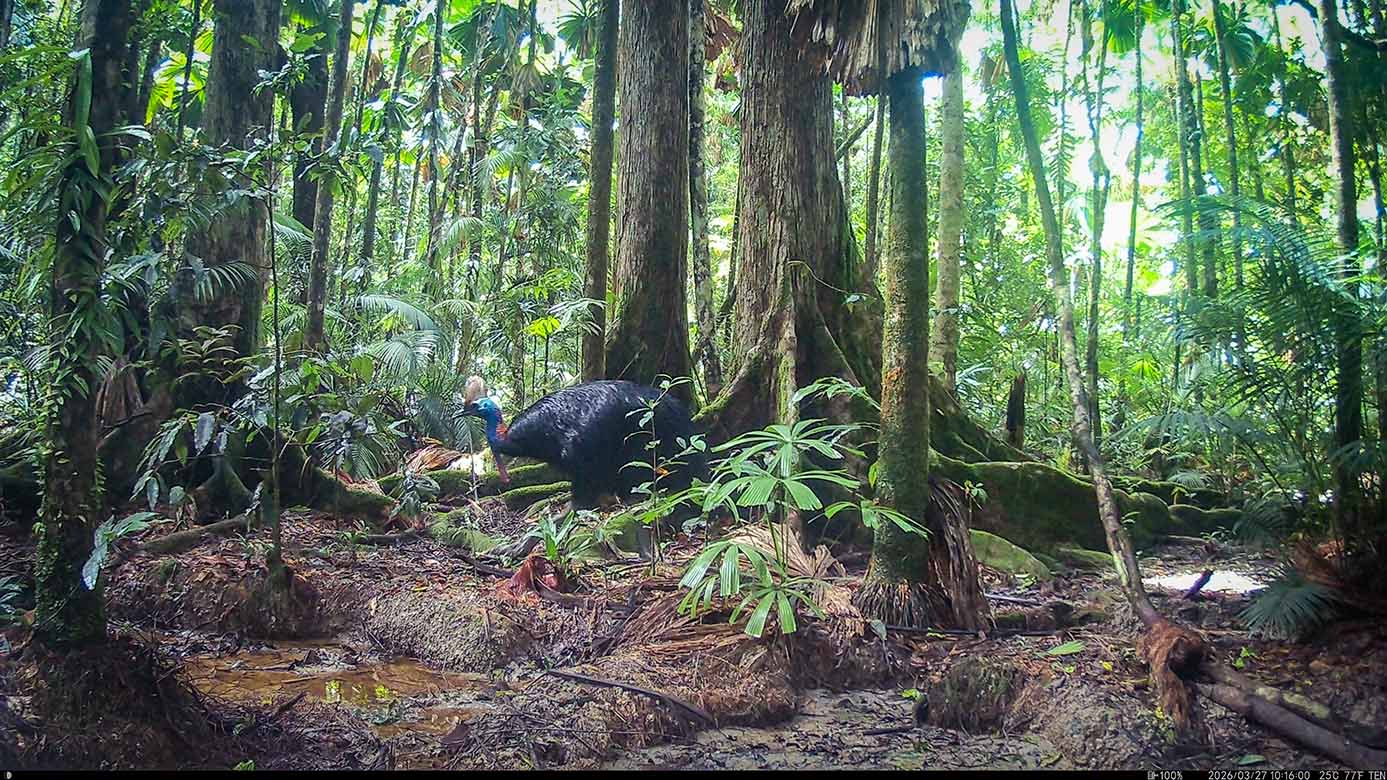
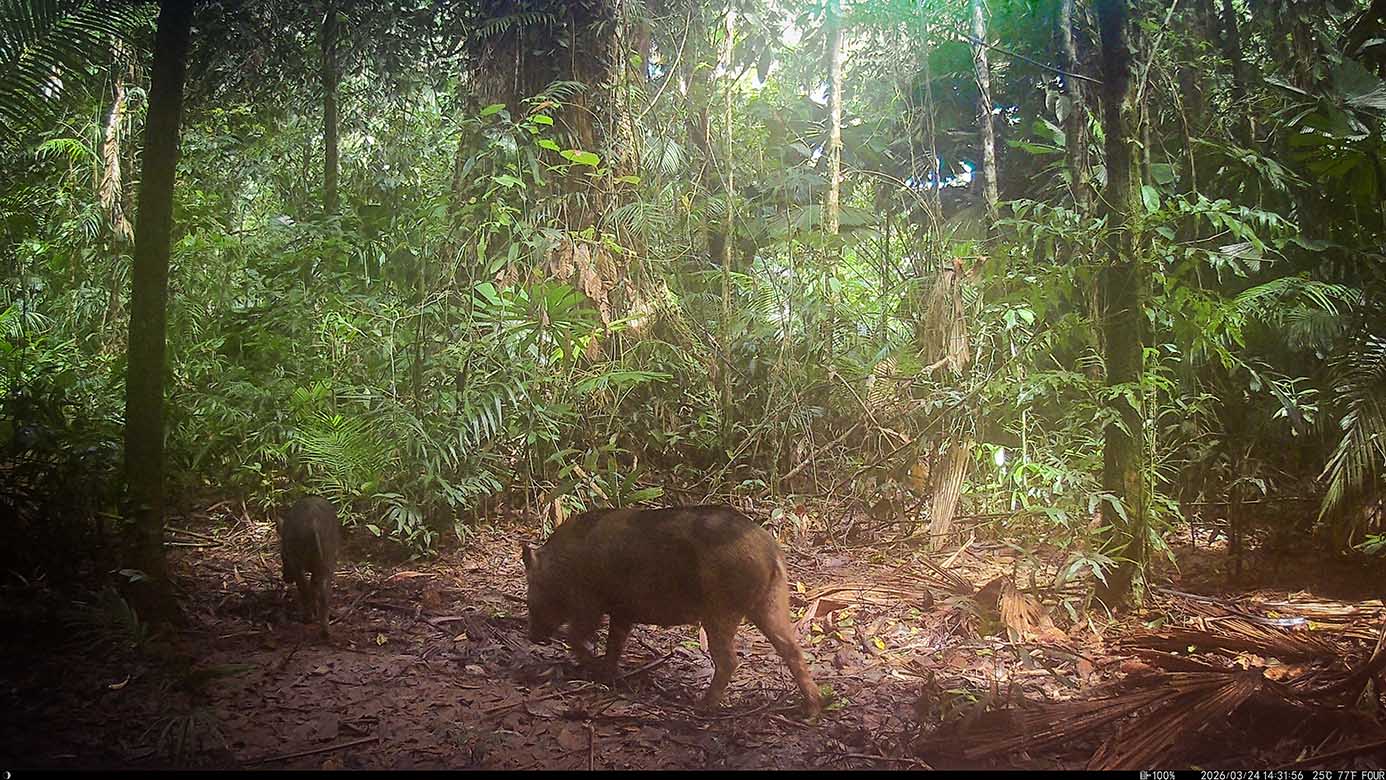
Camera Traps – March 2026 accrued 50-cassowary sightings, 28-dingoes and 95-feral pigs. Against the cumulative monthly average, cassowary numbers dropped by 51%, dingoes fell by 31% and feral-pig numbers diminished by 50%. Against March 2025, cassowaries were seen 74% less frequently, dingo numbers rose by a mere 4% and feral-pig numbers plummeted by 77%.
Image highlights from March 2026
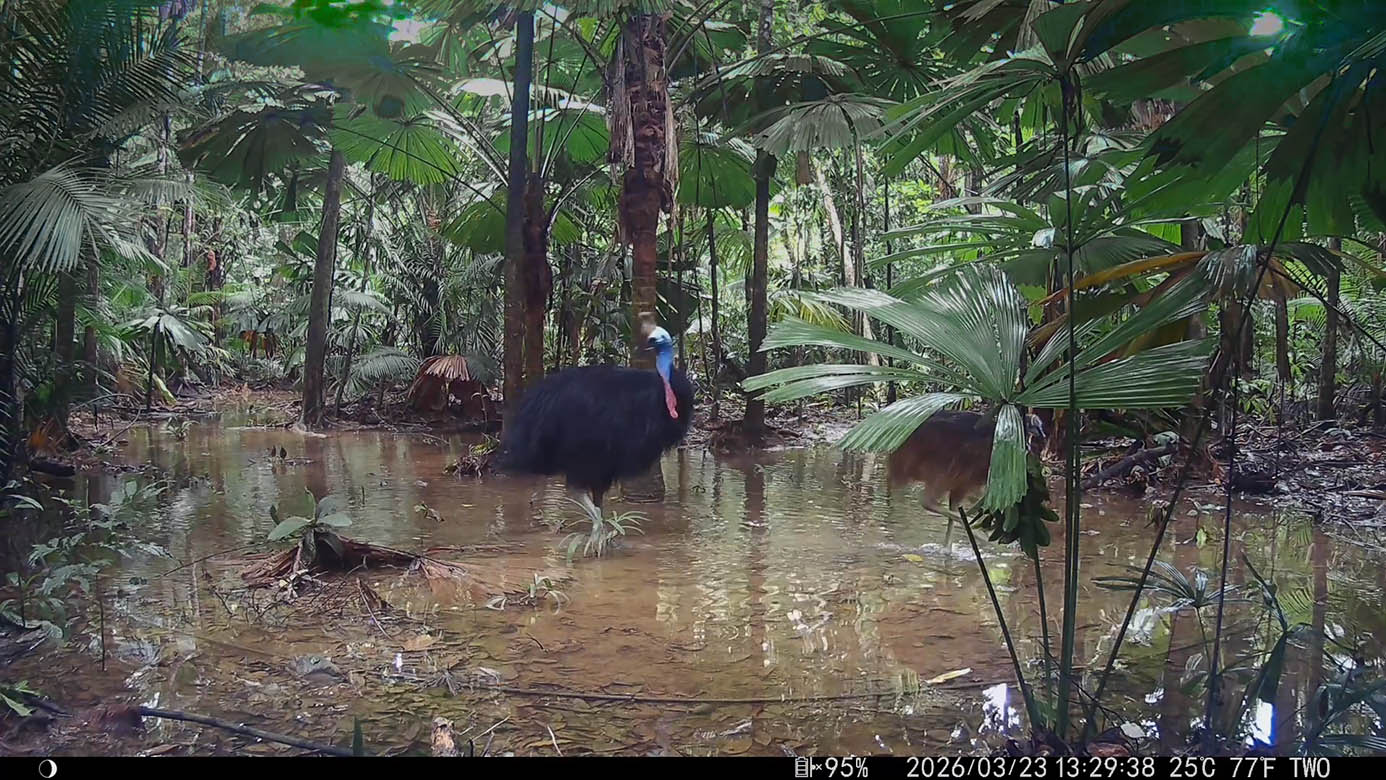
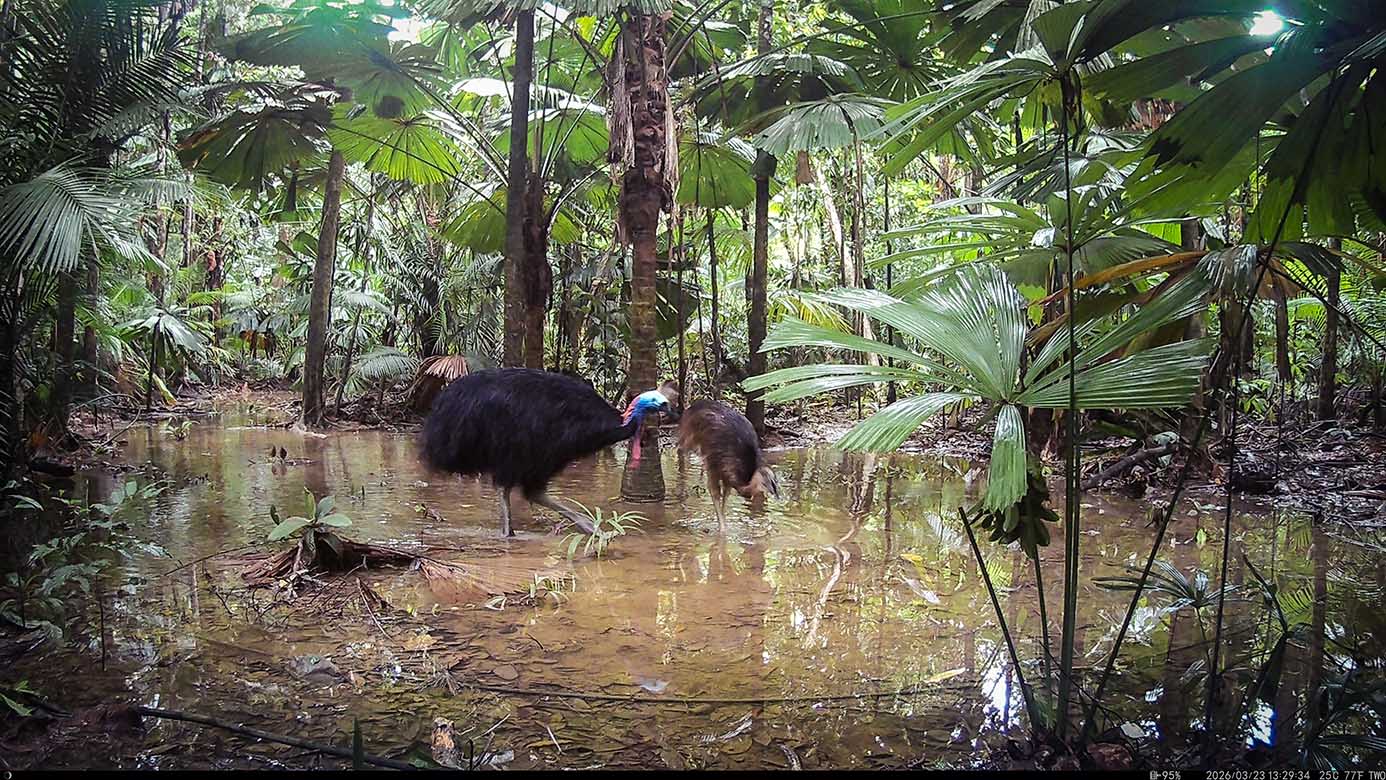
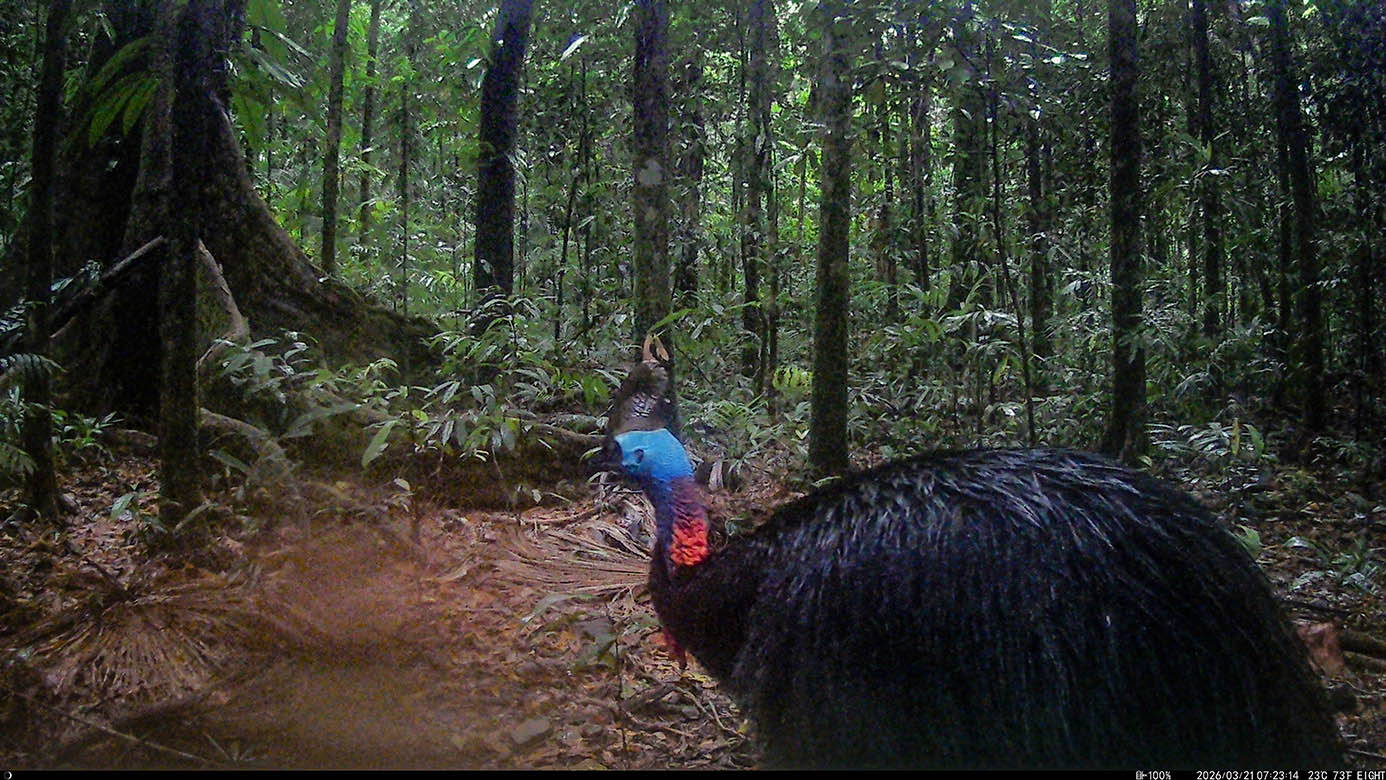
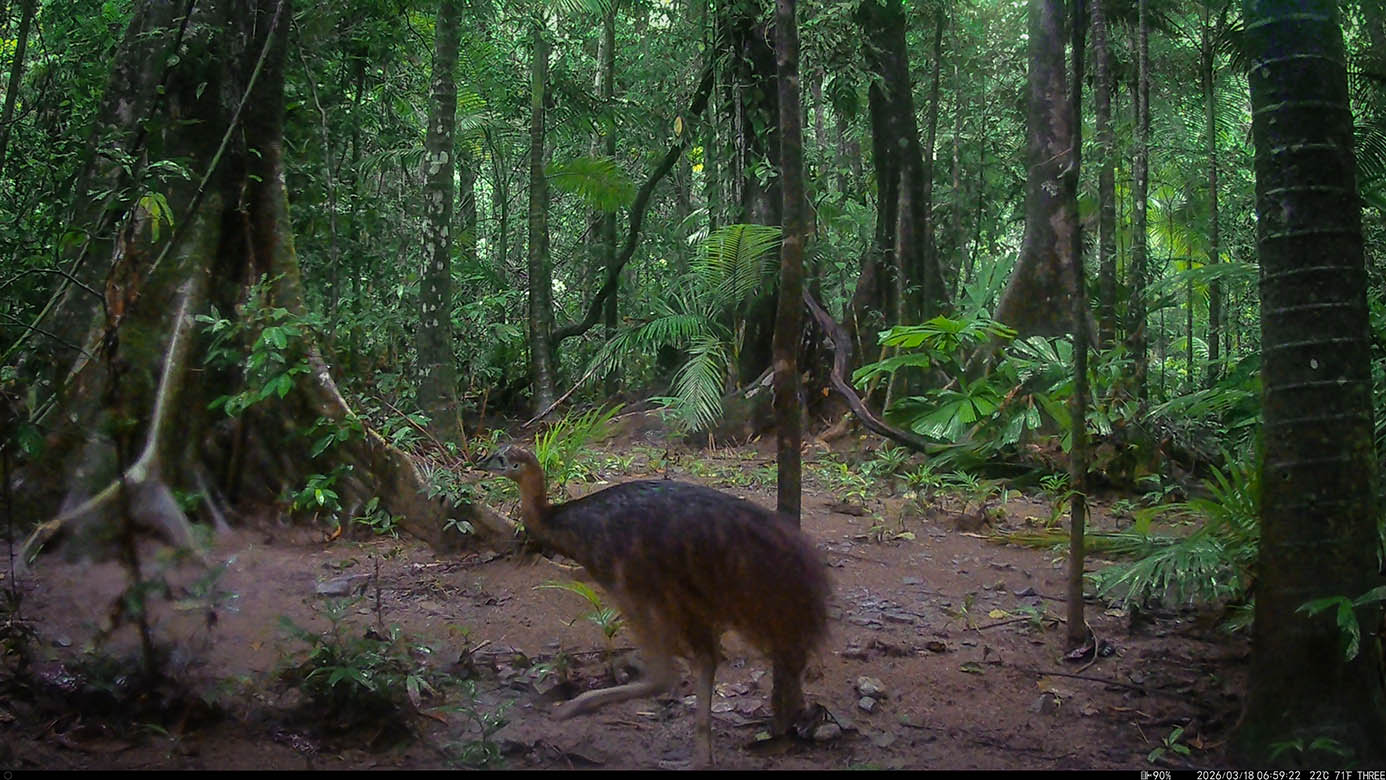
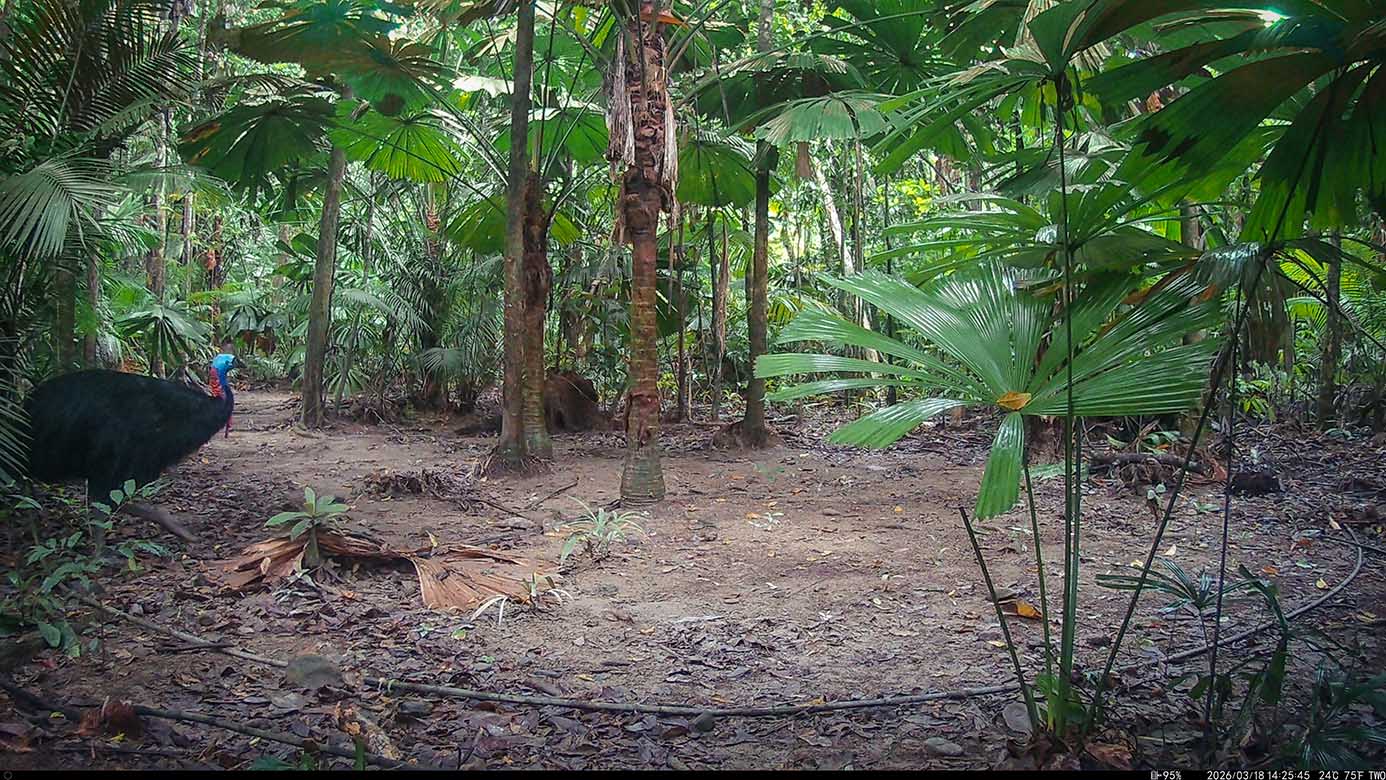
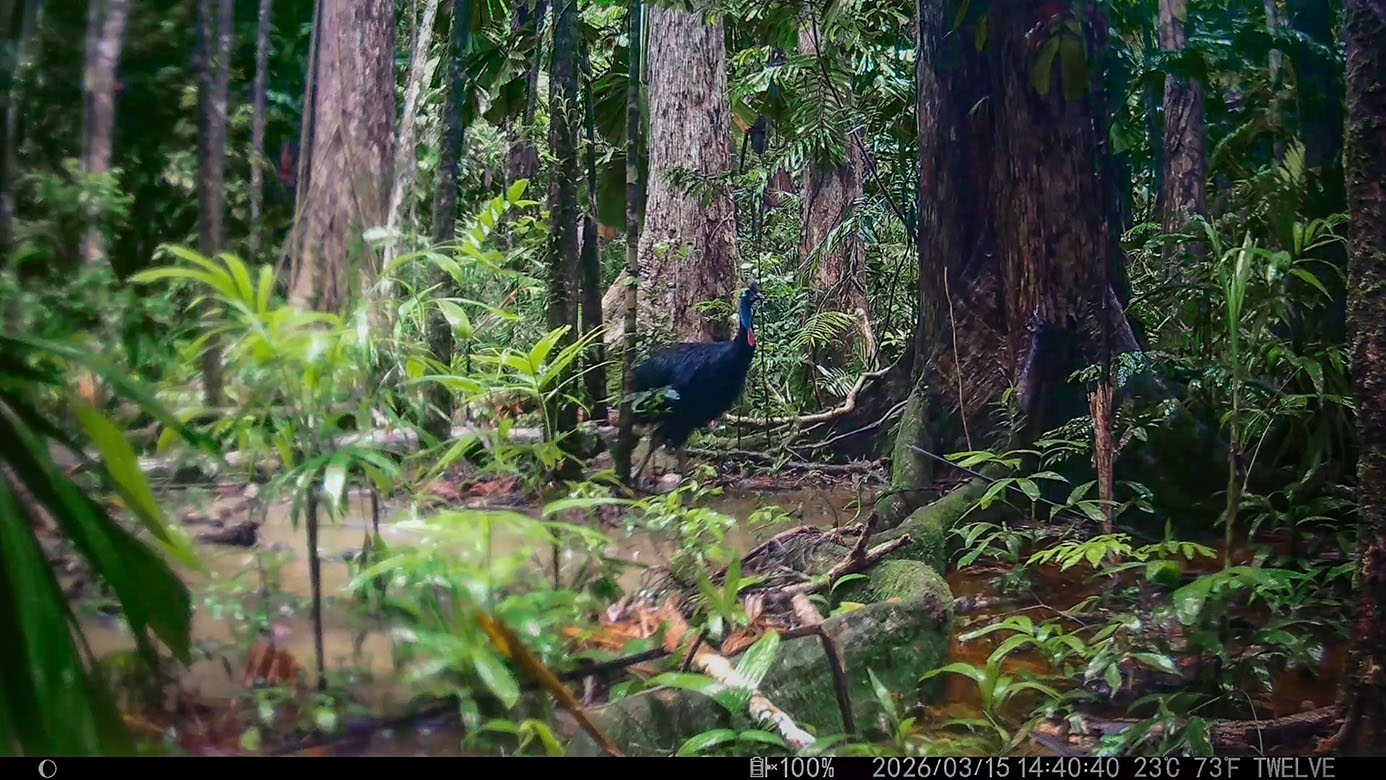
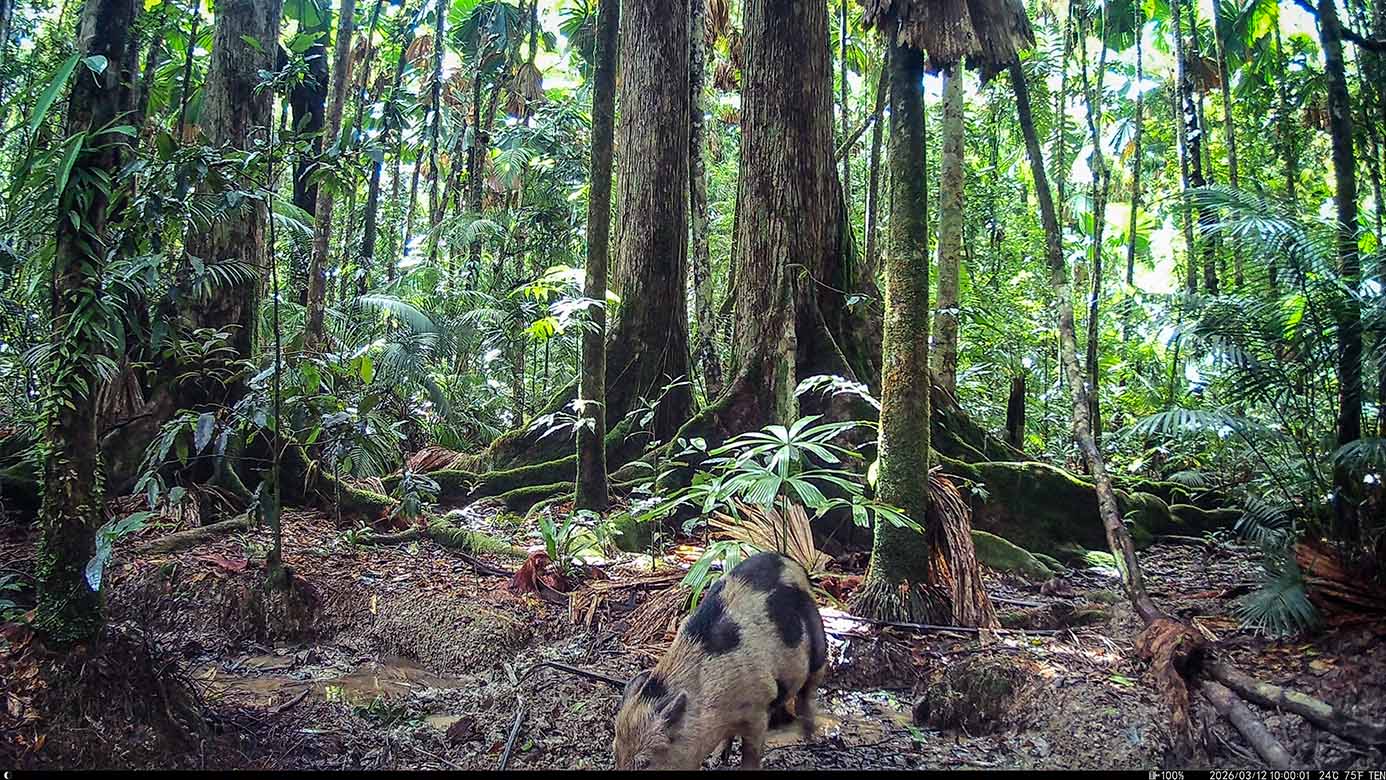
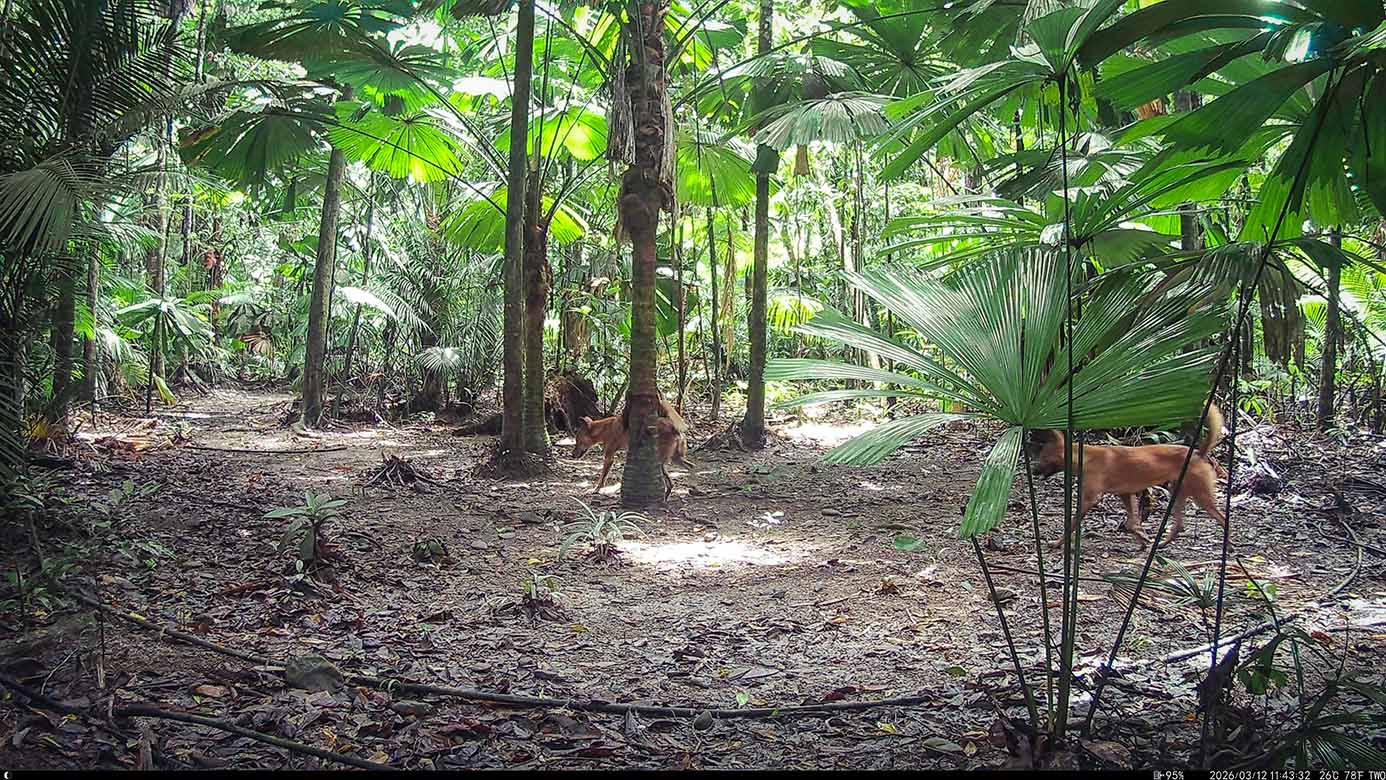
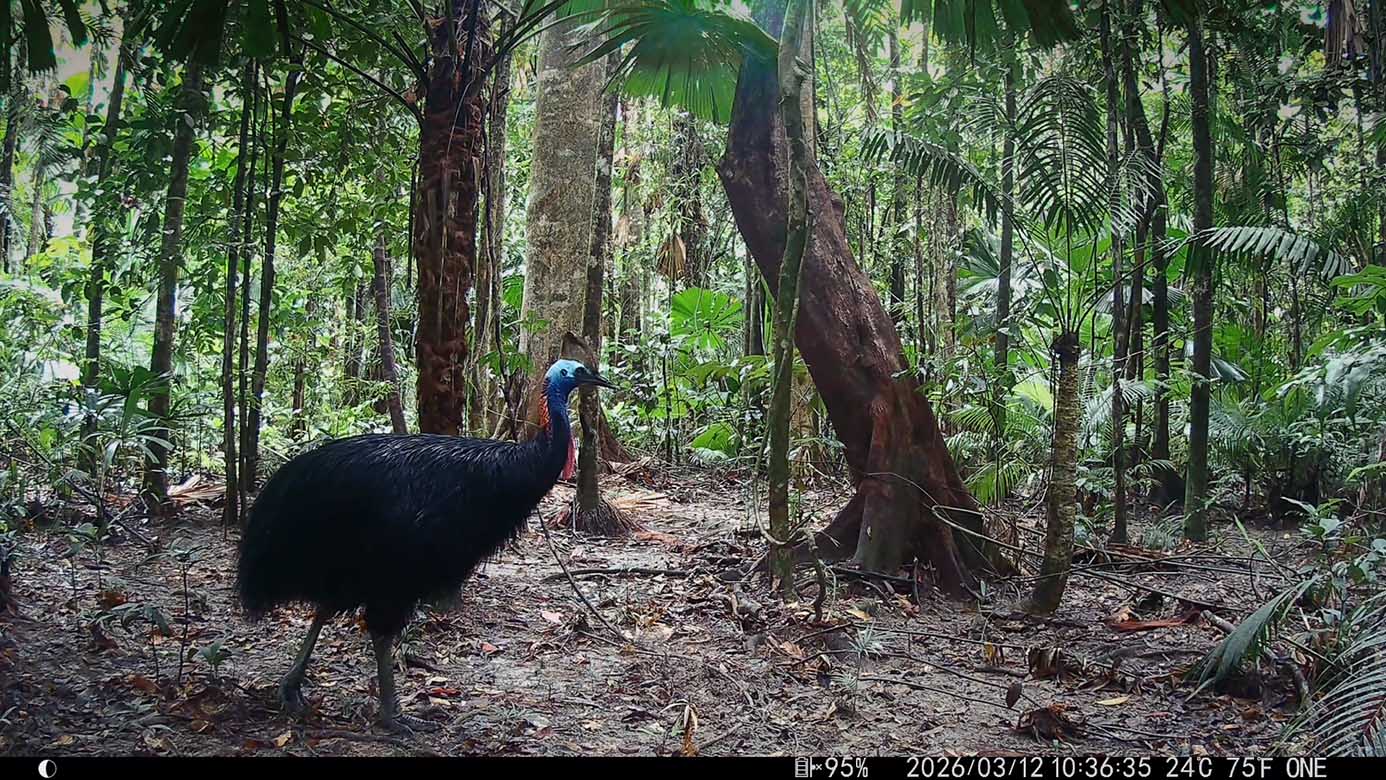
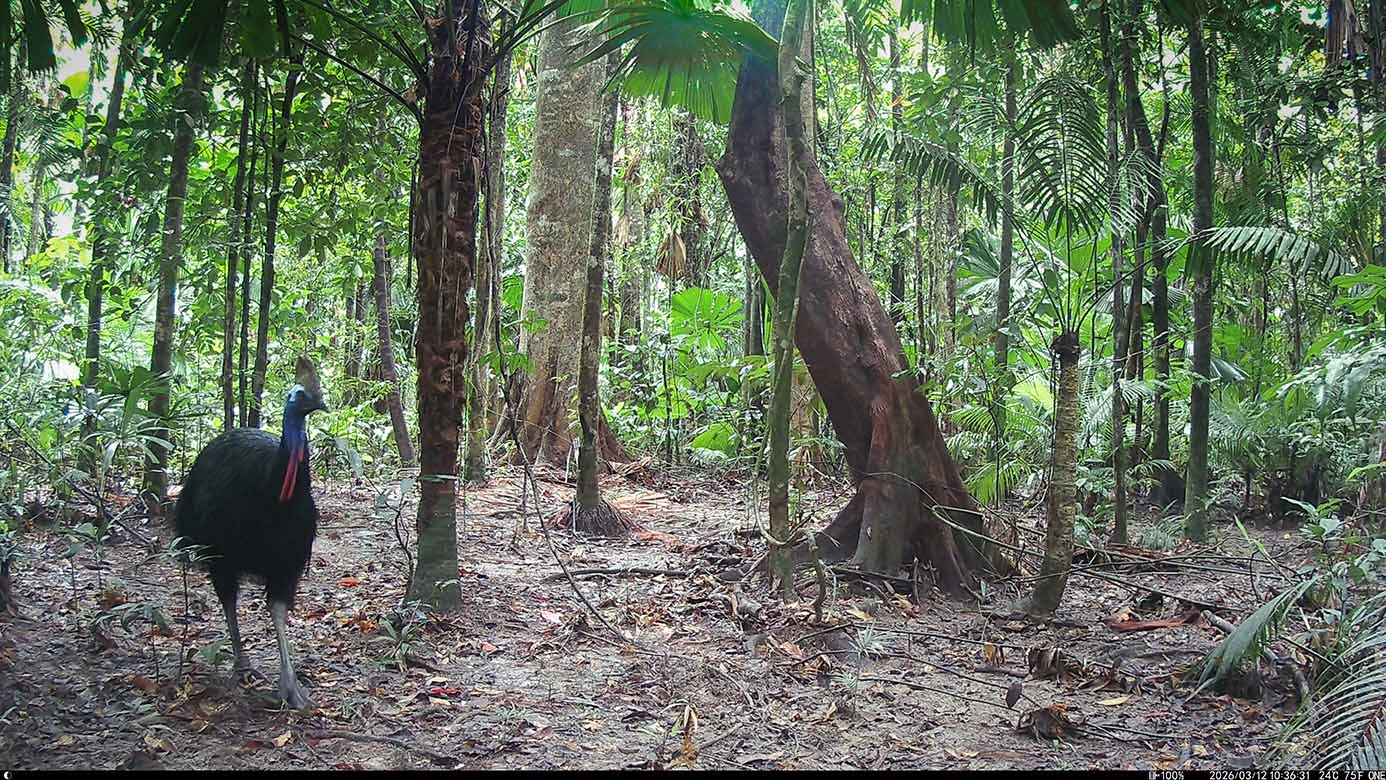
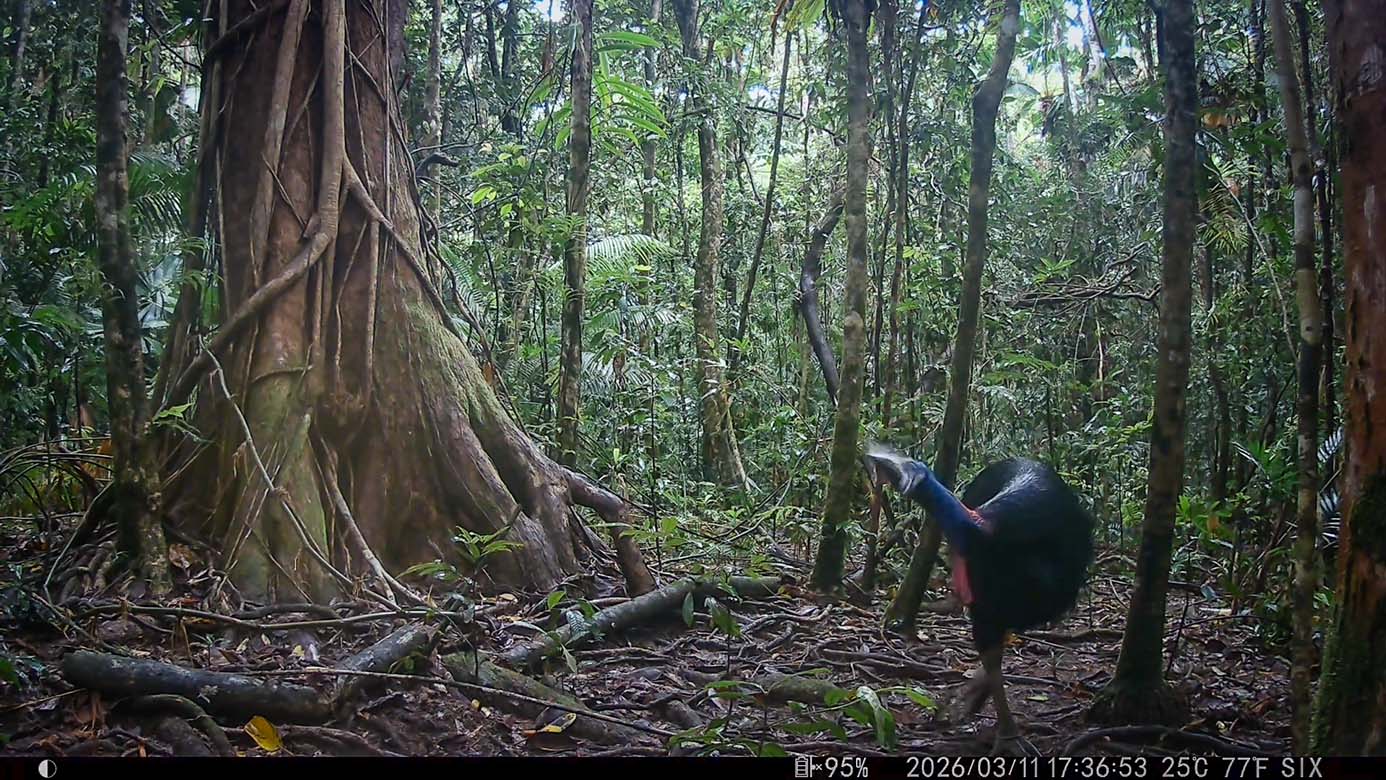
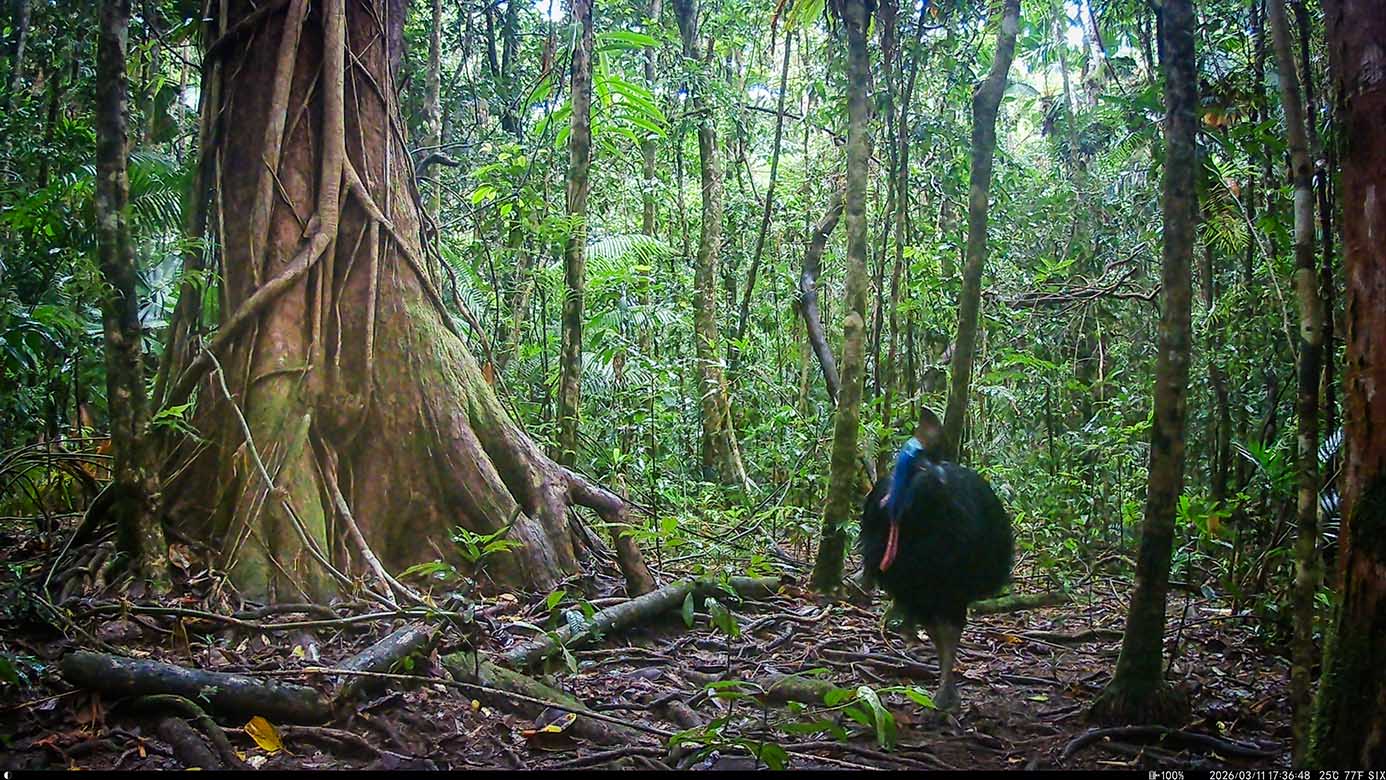
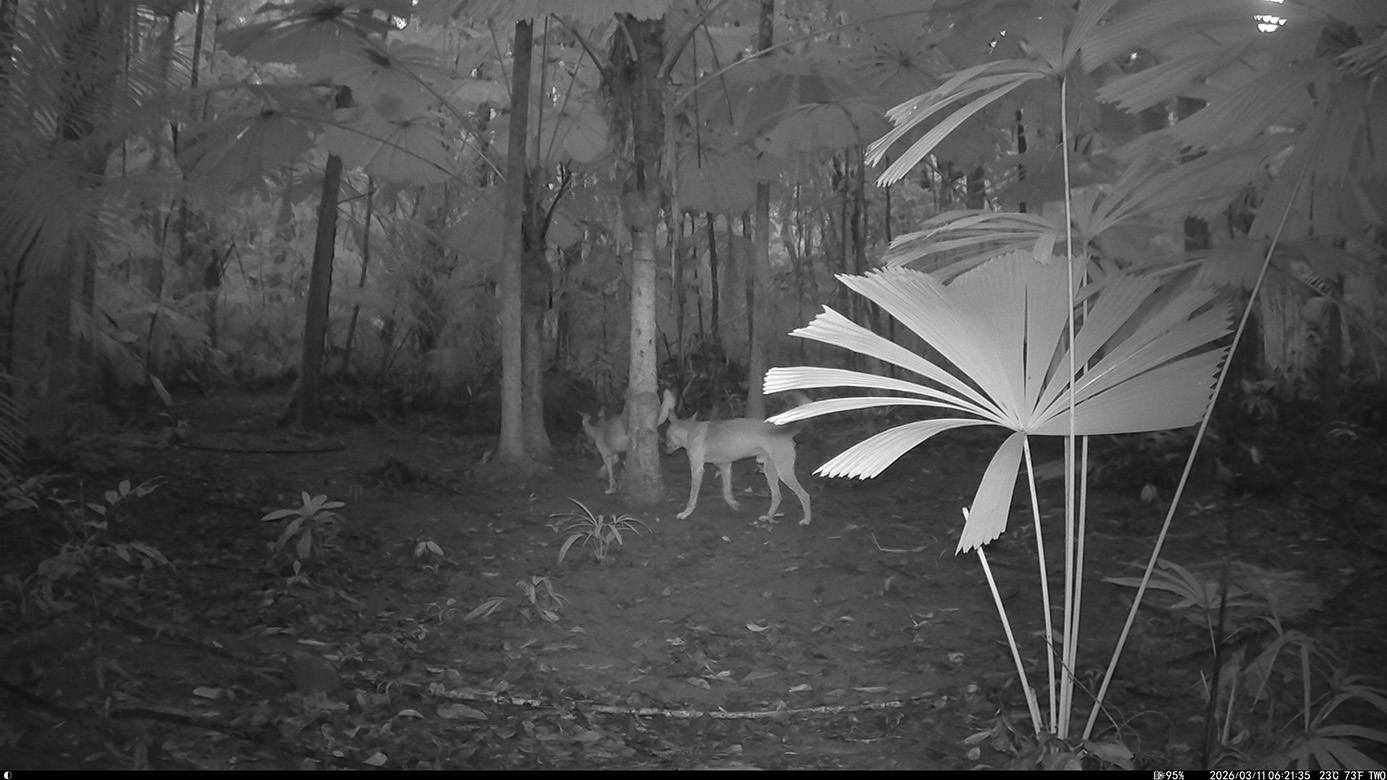
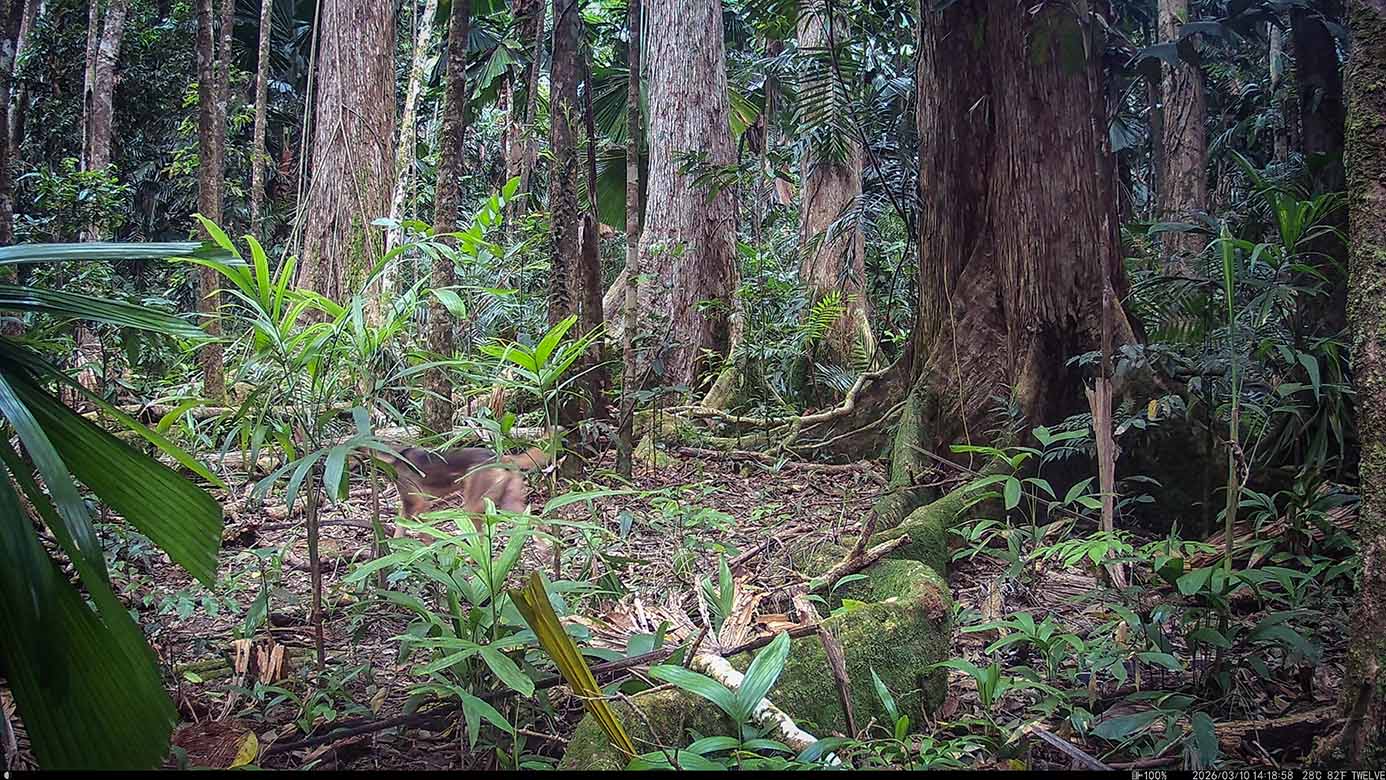
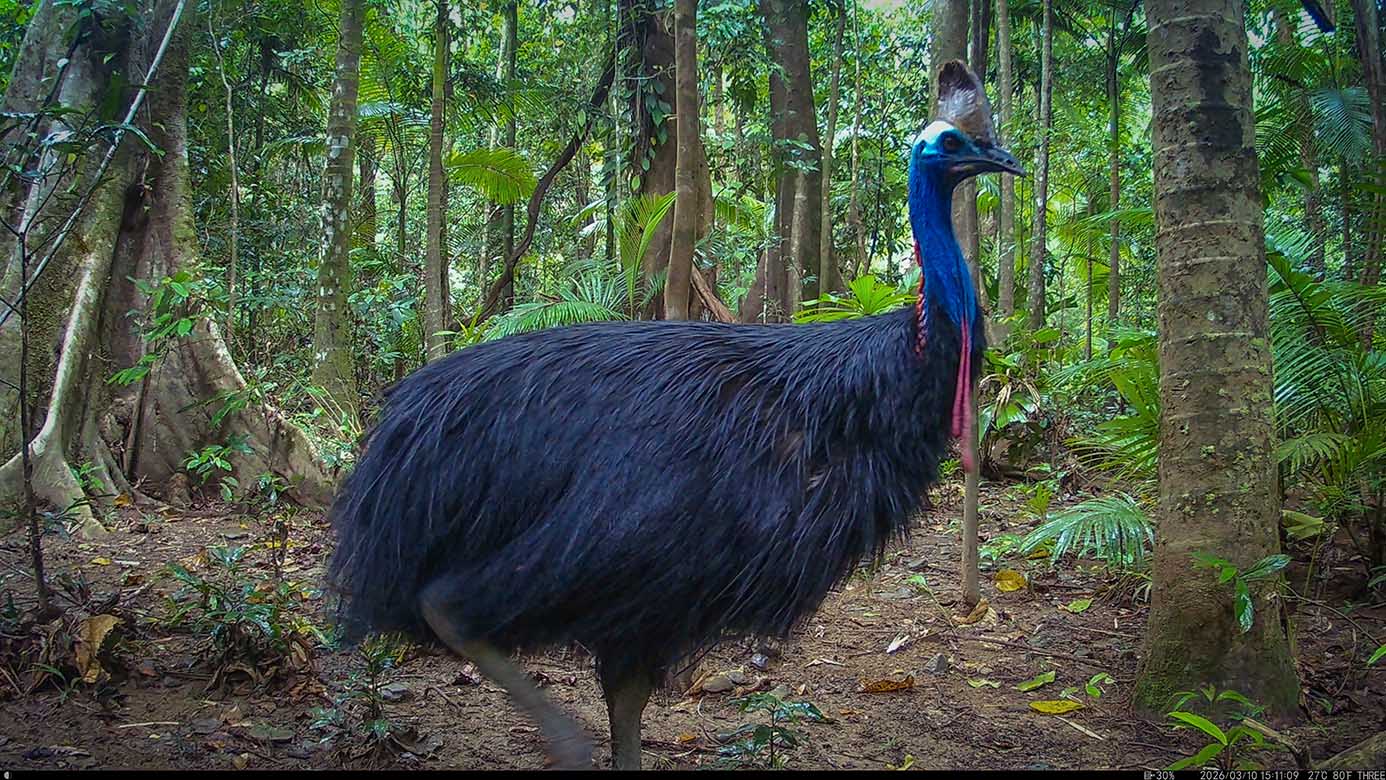
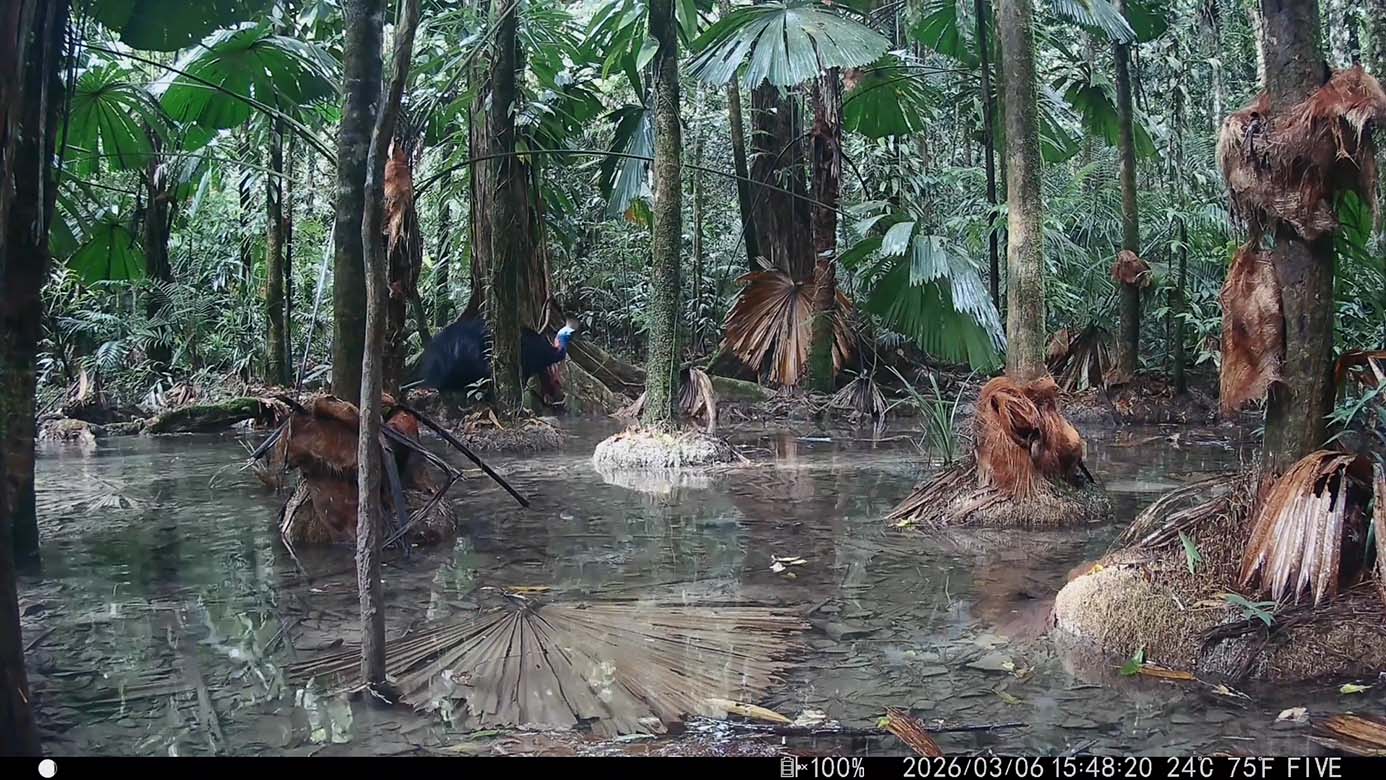
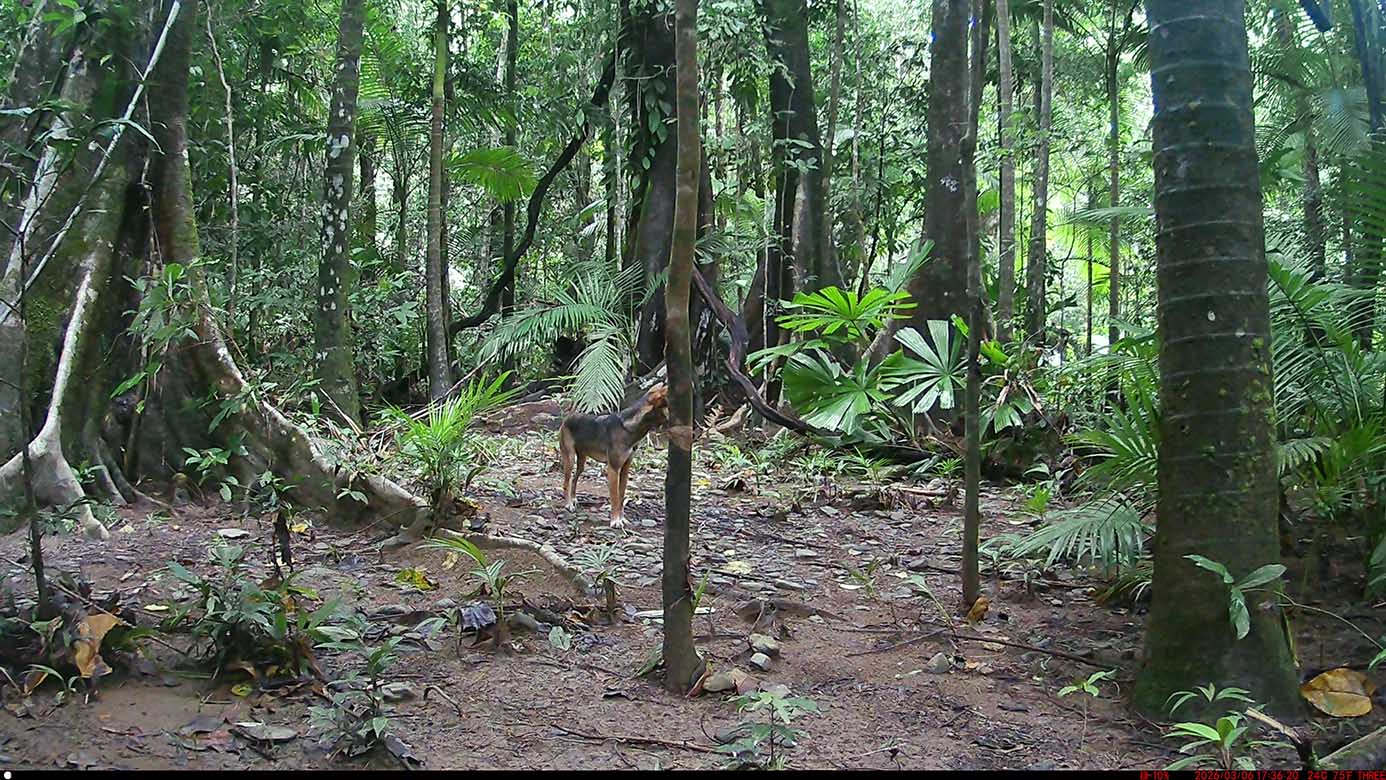
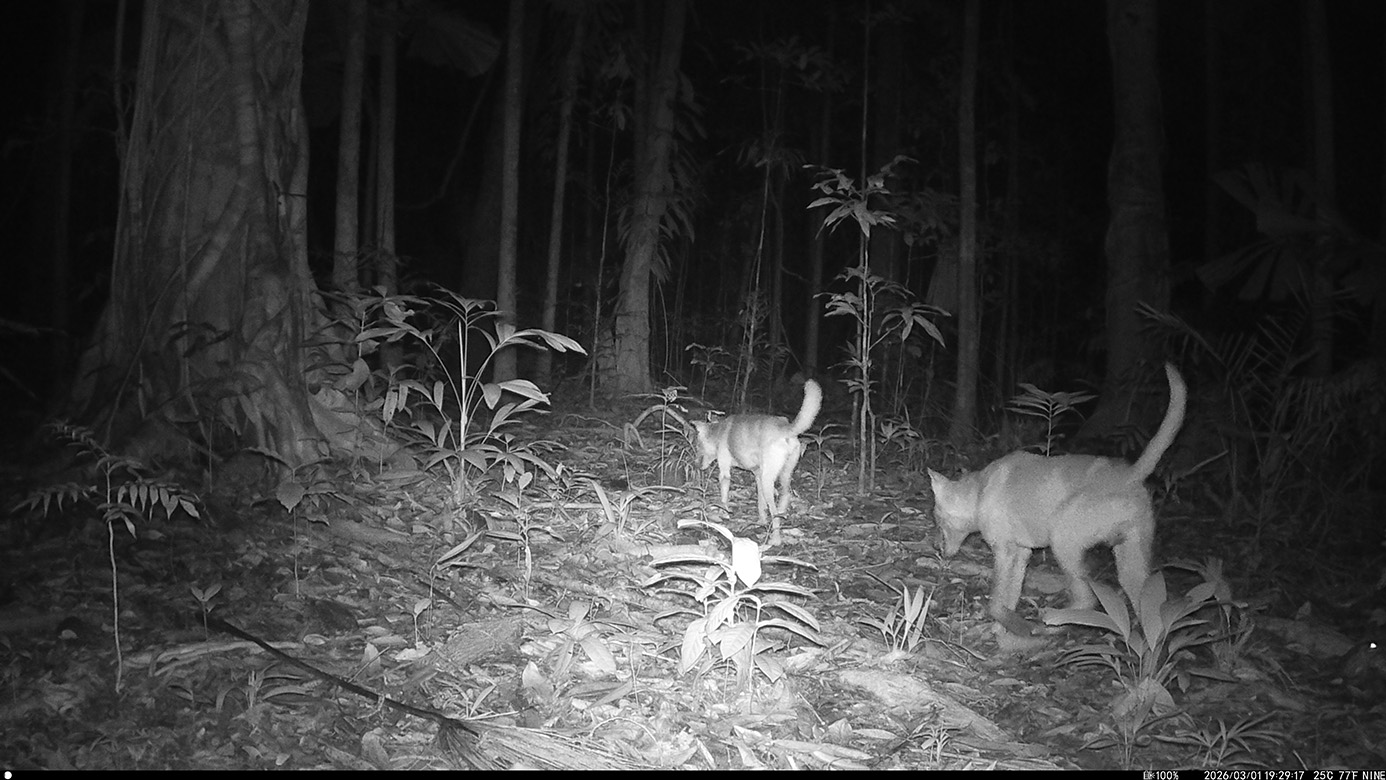
Keeping up with the cassowaries …
Luna
Delilah & Scaramanga
Scaramanga
Crinkle Cut & Wobbly
Cheryl
Introducing ‘Vee”
The Queensland Department of Primary Industries has released its (draft) feral-pig action plan 2026 – 2031 for public comment. This draft aligns with the National Threat Abatement Plan for predation, habitat degradation, competition and disease transmission by feral pigs (2017) and also links with both the National Threatened Species Strategy and the National Feral Pig Action Plan .
The first objective of the National Threat Abatement Plan is prioritising key species, ecological communities, ecosystems and locations across Australia for strategic feral pig management. In terms of Threatened Species per unit area, Queensland’s Wet Tropics is the most irreplaceable World Heritage Area in the world and because of its keystone significance, the Southern Cassowary – Casuarius casuarius is the most irreplaceable taxa. However, instead of flourishing from managerial excellence, as undisputed priority should rightfully facilitate, the over-whelming effect of current land-management-practice, accommodates some 60 feral-pigs for every cassowary, devastating the prospects of Endangered Cassowaries.
For over a century Queensland has been attempting to control feral pests, with efforts evolving from localised trapping and bounty systems to landscape-scale, coordinated management strategies, but despite all this determination and expenditure, the problem and the consequential demands for budgetary allocation only ever seem to increase. Perhaps the Expert Advisory Committee’s assertion, that
… being so widely established, feral-pigs cannot possibly be eradicated from Australia, with current resources and techniques and it is likely impossible in the near future …
undermines the Commonwealth Listing of ‘Predation, habitat degradation, competition and disease transmission by feral pigs (Sus scrofa)‘ as a key threatening process.
This draft also requires private and public land managers to ensure feral-pig management is undertaken in accordance with local government biosecurity management plans on a nil-tenure basis. But how many biosecurity orders has Douglas Shire Council issued to the State land-manager of the 82% of the Shire that is publicly-owned and World Heritage-listed, for allowing feral-pigs to be so abundantly accommodated within this majority portion of the Shire? Probably none, since the Biosecurity Act 2014 binds all persons, but neither the Commonwealth nor the State can be prosecuted for an offence against this Act.
Invasive species are often misrepresented as the major drivers of biodiversity loss and ecosystem degradation, when they are rather the evidential consequence of managerial ineptitude and ecological neglect. Neither Queensland nor Australia readily admits that the catastrophic rate of mammal decline and extinction over the last one-hundred-and-fifty-years, which has exceeded the rest of the world combined, is, however unwittingly, due to its own mismanagement. Deflecting blame upon pests for being pests is a tautology. Legislating for pests’ prohibited, restricted or undesirable status will never have any meaning to the pests, neither will they ever face their day in court if a warrant is issued.
As Australia’s pest problem is both environmental and also inter-jurisdictional, the Intergovernmental Agreement on the Environment 1992 must inform the country’s strategic response. Having cultivated this feral-pest disaster, governance is indisputably responsible for its resolution, ensuring that measures adopted are cost-effective and not disproportionate to the significance of the environmental problems being addressed. Bearing in mind that intergenerational equity becomes unrecoverable with extinction, stemming this loss of species and conserving biological diversity and ecological integrity into the future will require successful eradication across all tenures without discrimination. Of course, the most cost-effective way to resolve the feral-pig problem is to eliminate any possibility of recurrence, so eradicating every single feral-pig as quickly and as cheaply as possible, is well justified. Legislation can only ever have influence over law-abiding humans, but the legislature has not yet bound Australia into an eradication obligation by a set date, say 2050; and neither has it constrained officers of the Commonwealth and States with prosecutable compliance requirements.
The energy, habitat and nutriment that sustains the estimated 24-million feral pigs across 45% of Australia, robs native biota of its commensurate sustenance. Because there is only one thing that can wilfully change this state-of-ecological disrepair, and that is the will of the nation, Australia and all its states & territories must abandon all conviction to the misbelief that it is too hard and beyond our national capability. Indeed, anyone holding such negative conviction should not be paid for their technocratic contribution to this matter of national environmental significance. Priority eradication must be the country’s sole objective.
There is no denying that early policy-advisors were driven by the conviction that introduced non-native species would acclimate and adapt to their new environments. Indeed, colonial acclimatisation societies rationalised that enriching Australia’s native fauna with European species, would allow colonists to overcome nostalgia and once again enjoy the recreational, culinary and economic benefits of favoured quarry transported from the countries and cultures of their ancestral heritage. Acclimatisation societies also advocated for protection of native species, but the emergence of ecology ultimately transformed expert and public opinion against introduced species, with quarantine regulations emerging as these groups progressively transformed into nature conservation services.
Public administrators within this sphere of influence still espouse ecological ideals; however, they almost invariably disregard the ecological consequences of extirpated Indigenous human inhabitants, along with all their unrivalled knowledge and custodial expertise, perpetuating a terrible ecological toll. The removal of this natural apex predator not only created vacancies for feral-pests to proliferate within, but it also robbed environments of their greatest understanding, appreciation and correspondingly passionate custodial excellence. Transference of energy through the food-web consequently slumped and secondary predators inherited de facto apex predatorship, but without the ingenuity and knowledge amassed by human inhabitants over thousands of generations, nor those uniquely human sensitivities of foresight, altruism and spiritual discernment.
Ecosystem modification has been acknowledged as a threat to almost three-quarters of Australia’s threatened taxa, but the removal of human inhabitants caused catastrophic damage to fire regimes, by robbing ecosystems of the one species of inhabitant with the capacity to propagate fire-at-will and the wisdom to do so with ecosystem health, productivity and security optimised. Fire, without human managerial finesse, subverts country into catastrophic conflagration, destroying vast swathes of habitat, including many species that have evolved to cope with or rely upon less intense burning regimes.
Regrettably, this draft is doomed from the outset for neglecting two major aspects of the real national feral-pig problem:
The ecological removal of Indigenous human inhabitants, which created vacancies that cultivated feral-pigs and some 72-additional vertebrate species into pestilent proliferation, and
The division of pest habitat into ‘reserve’ and ‘off-reserve’ purposes, turning the former into unintended pest sanctuaries, whilst the latter is regulated to be invasive-species-free.
Australia has some 10,500-conservation reserves, making up 22.5% of the terrestrial landscape and 77.5% of the country is ‘off-reserve’, with landholders burdened with a general biosecurity obligation. It is not that the majority of the continental landscape is inadequately regulated for pest-control, but that the magnitude of unintended sanctuary upon the ‘reserve’ portion totally trivialises the country’s investment in pest abatement or eradication.
Feral-pigs desecrate the integrity of Australia’s nature-based tourism product and cost Australia’s agricultural sector over $156 million per year in agricultural losses. As apex predators, Indigenous human inhabitants were of peak ecological importance to their environment’s health, productivity and security. Unrivalled in their understanding and appreciation of the full complexity of life within their landscapes and across every variation of season, the eviction of the only species of organism to have existed with the intellectual capacity to discharge custodial excellence with spiritual finesse, effectively gave feral-pigs unfettered occupancy under an unintended blanket of legislative protection.
Unless the national pest problem is acknowledged as a product of our own human volition, having allowed introduced biota into landscapes historically removed of Indigenous human inhabitants, beneath the absurdity of belief that ecosystems without human inhabitants can be controlled legislatively, any recovery plan will regrettably be doomed from the outset.