


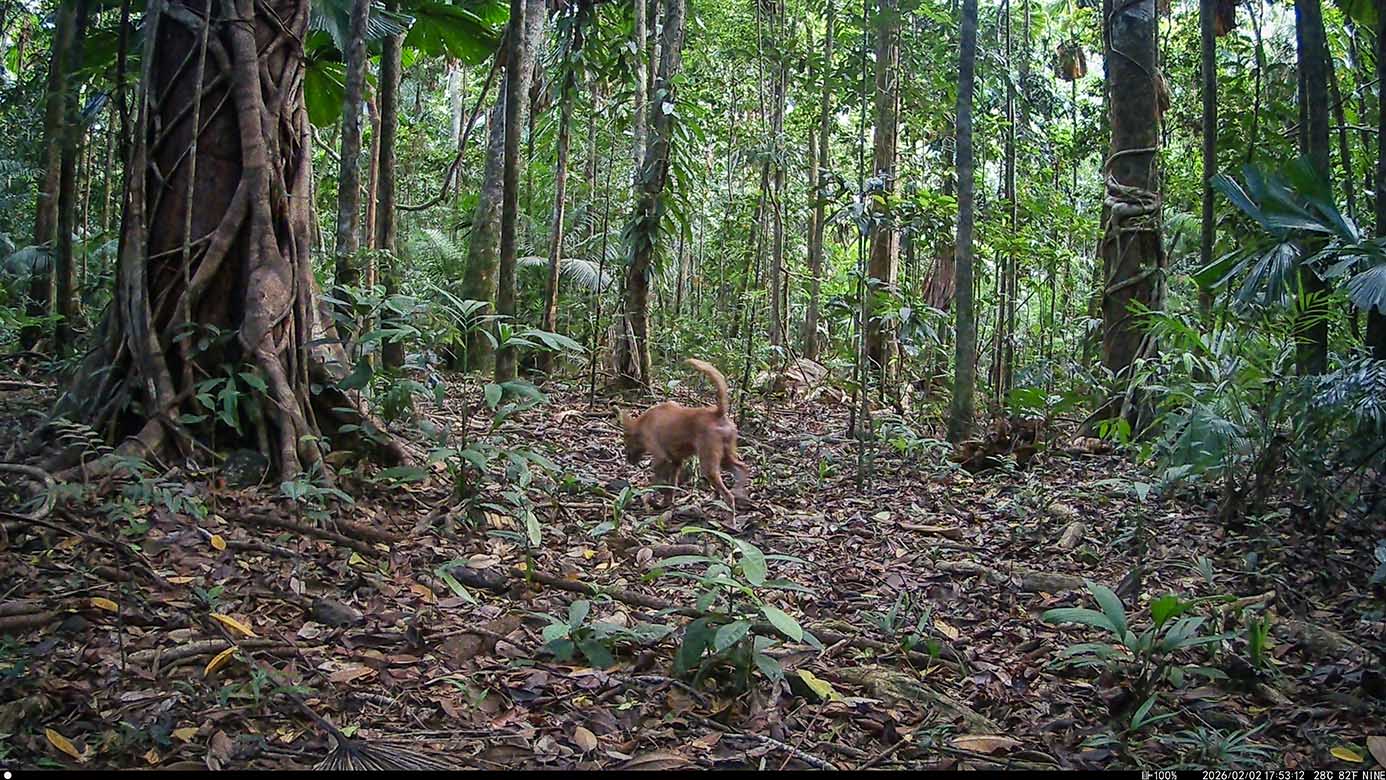
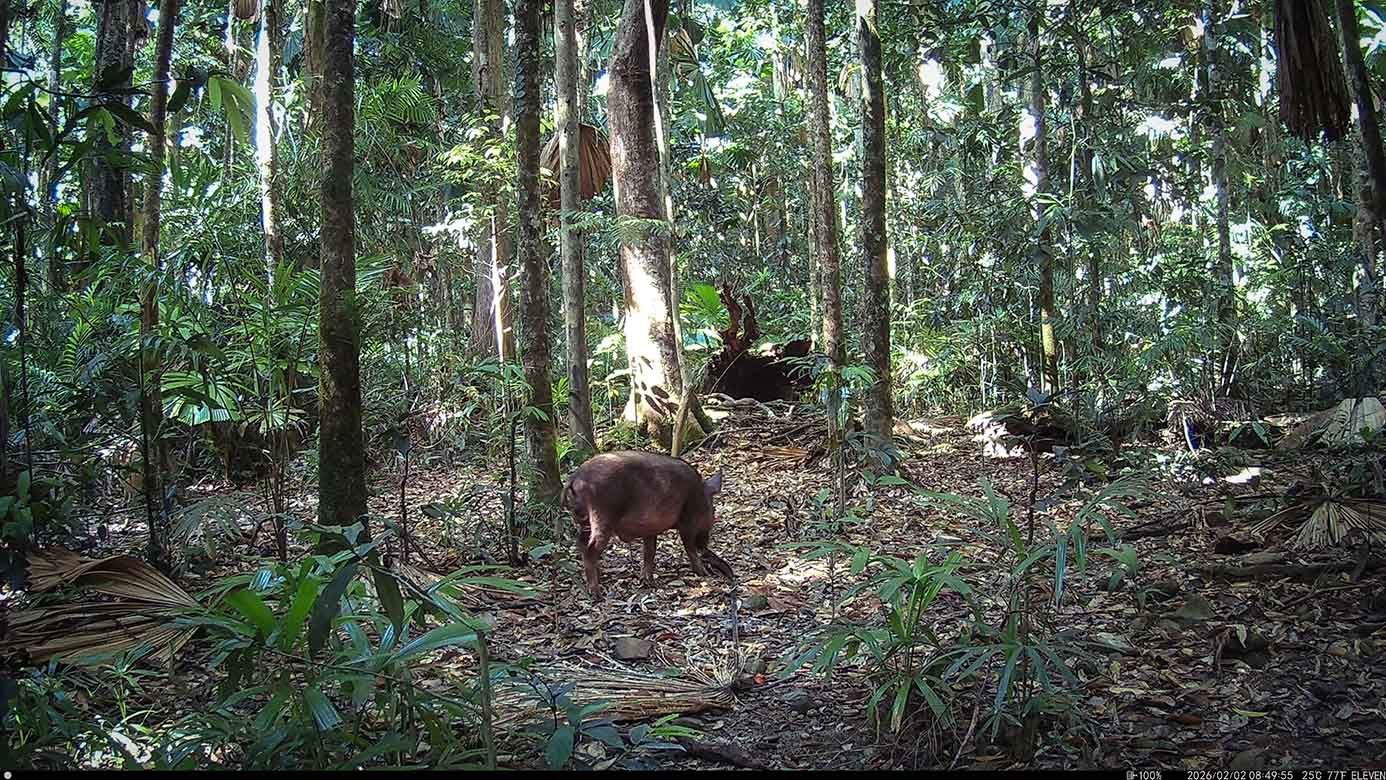
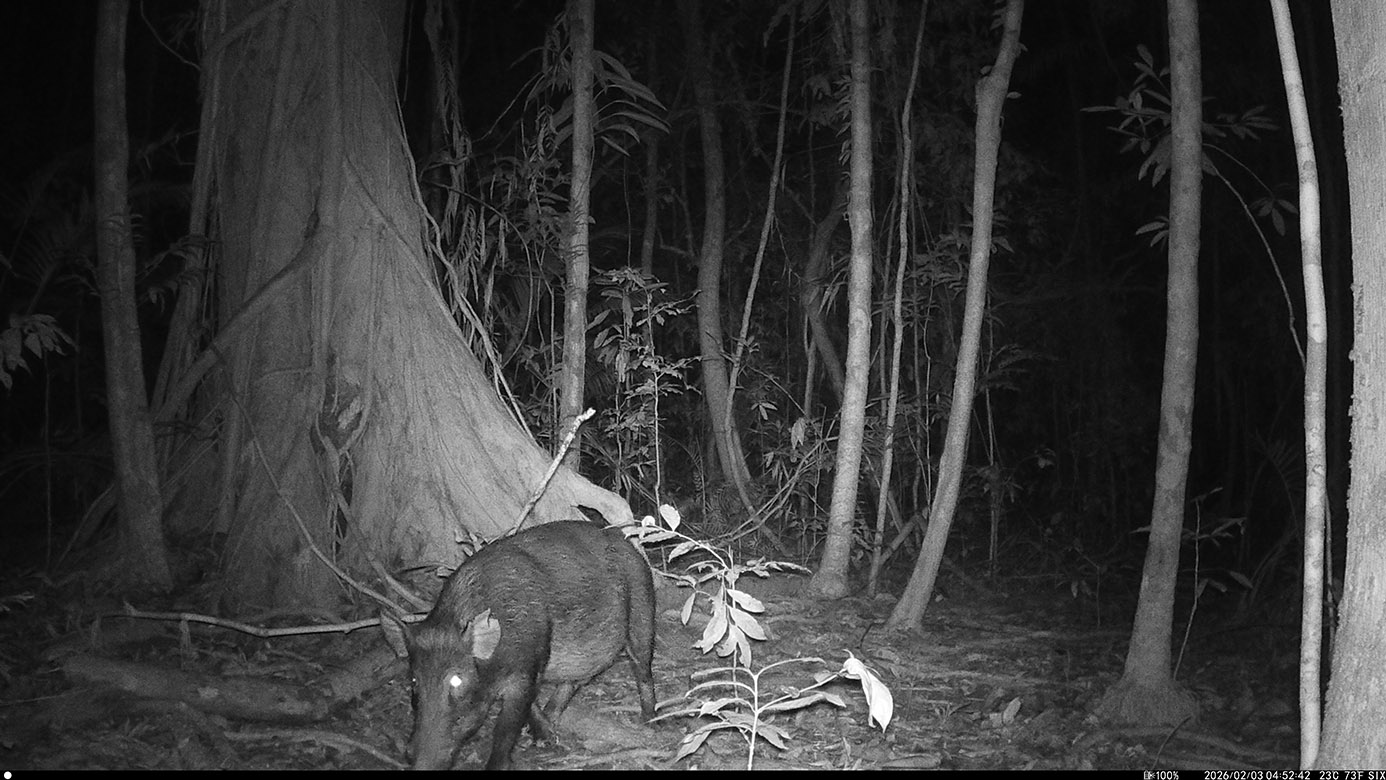
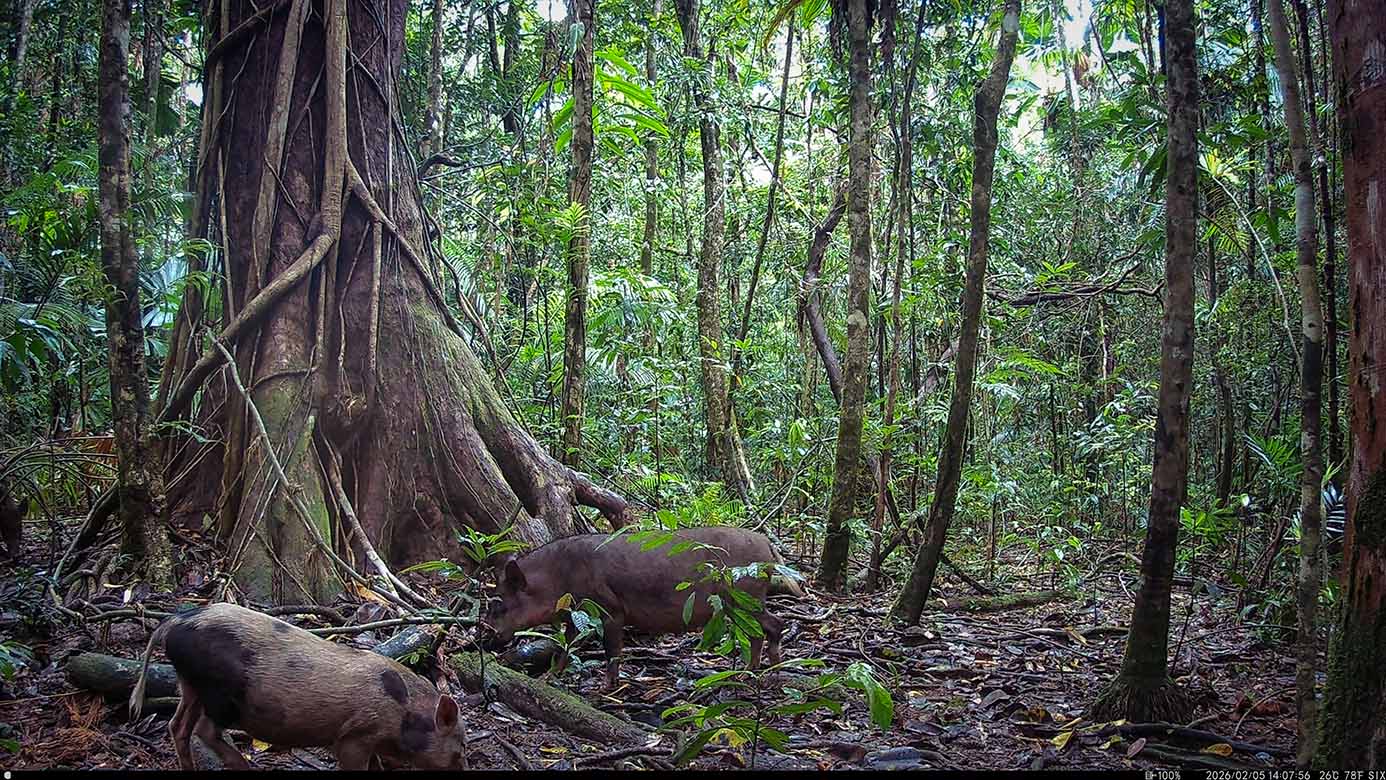
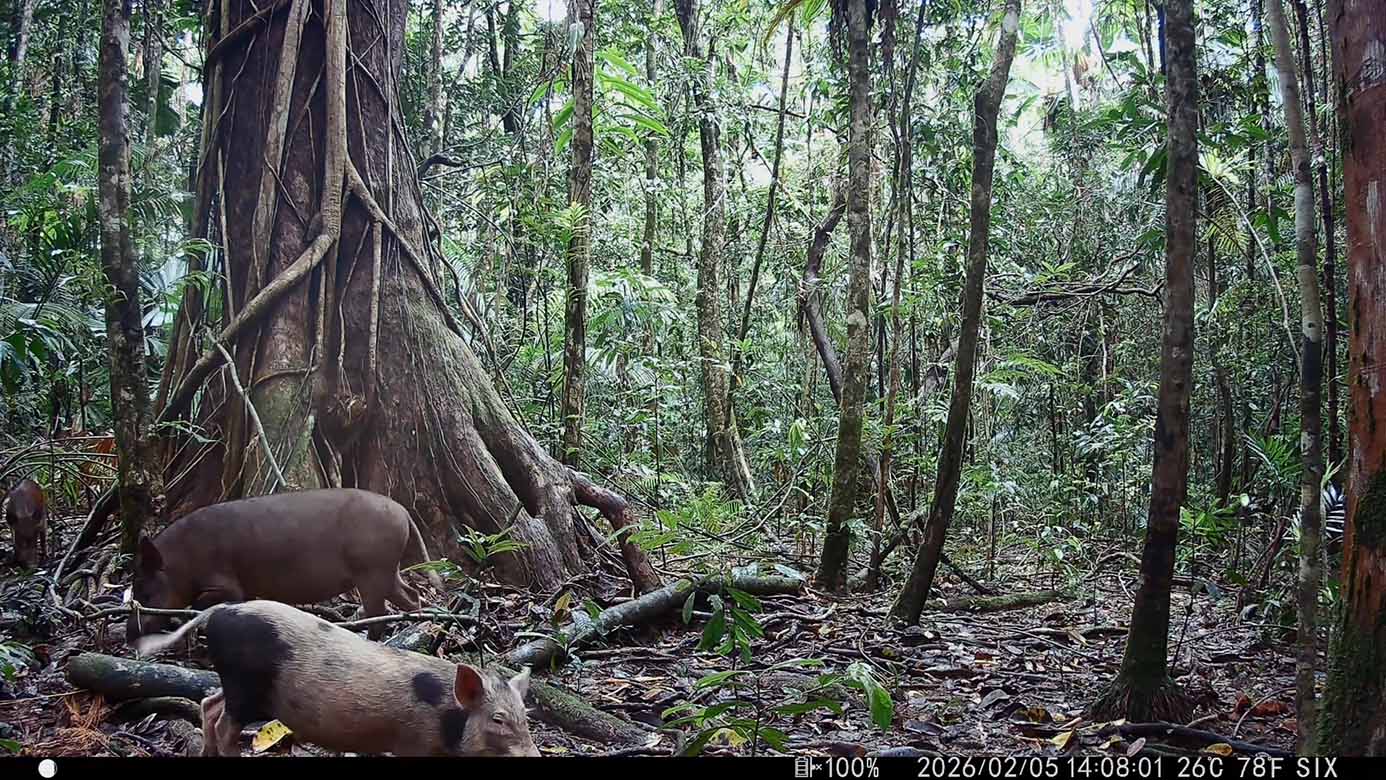
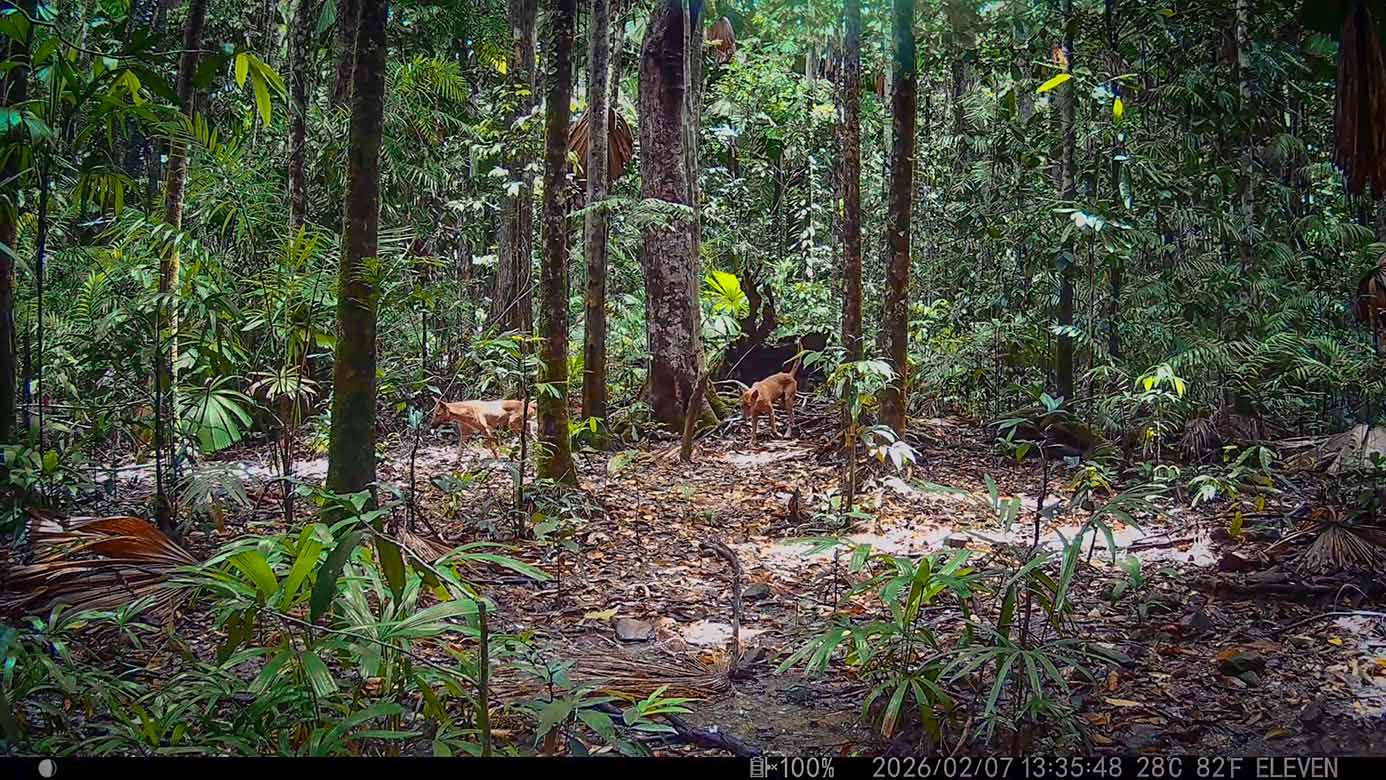
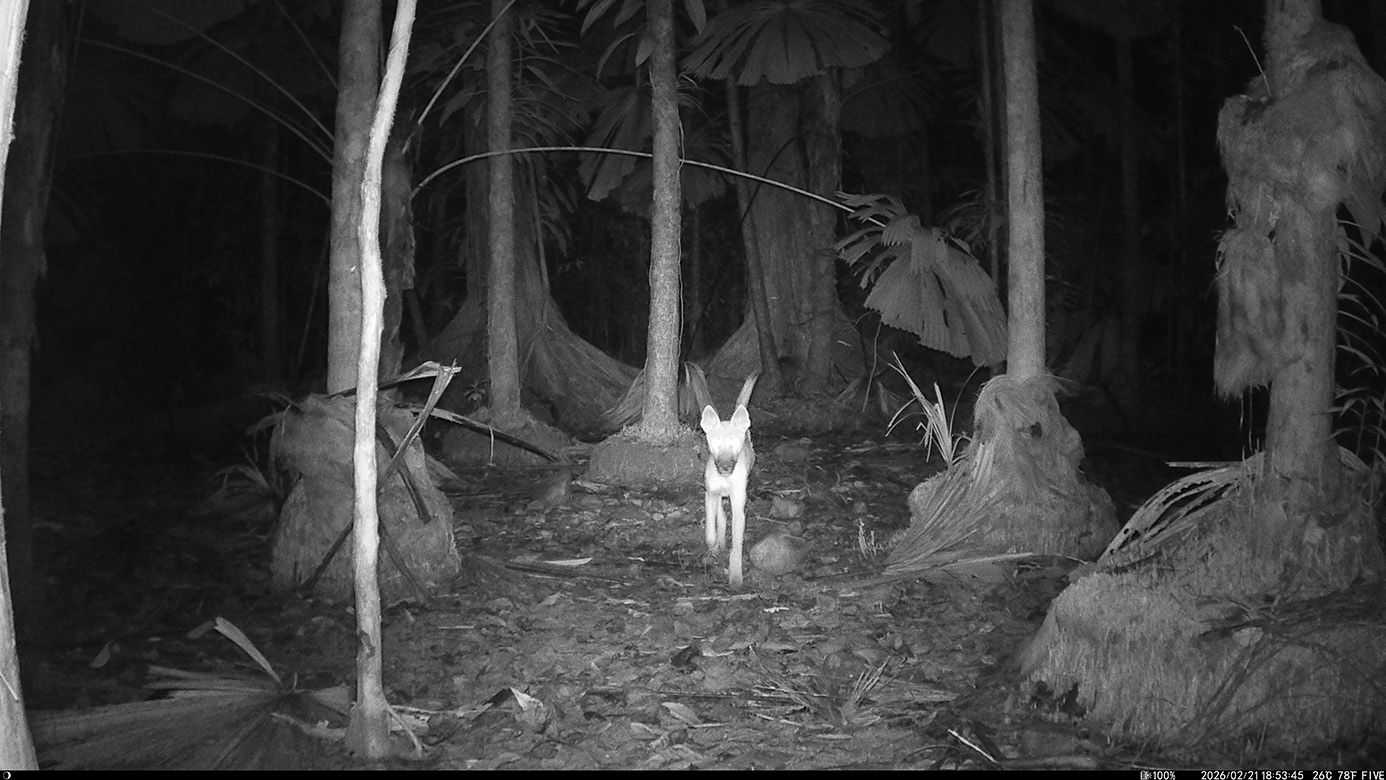
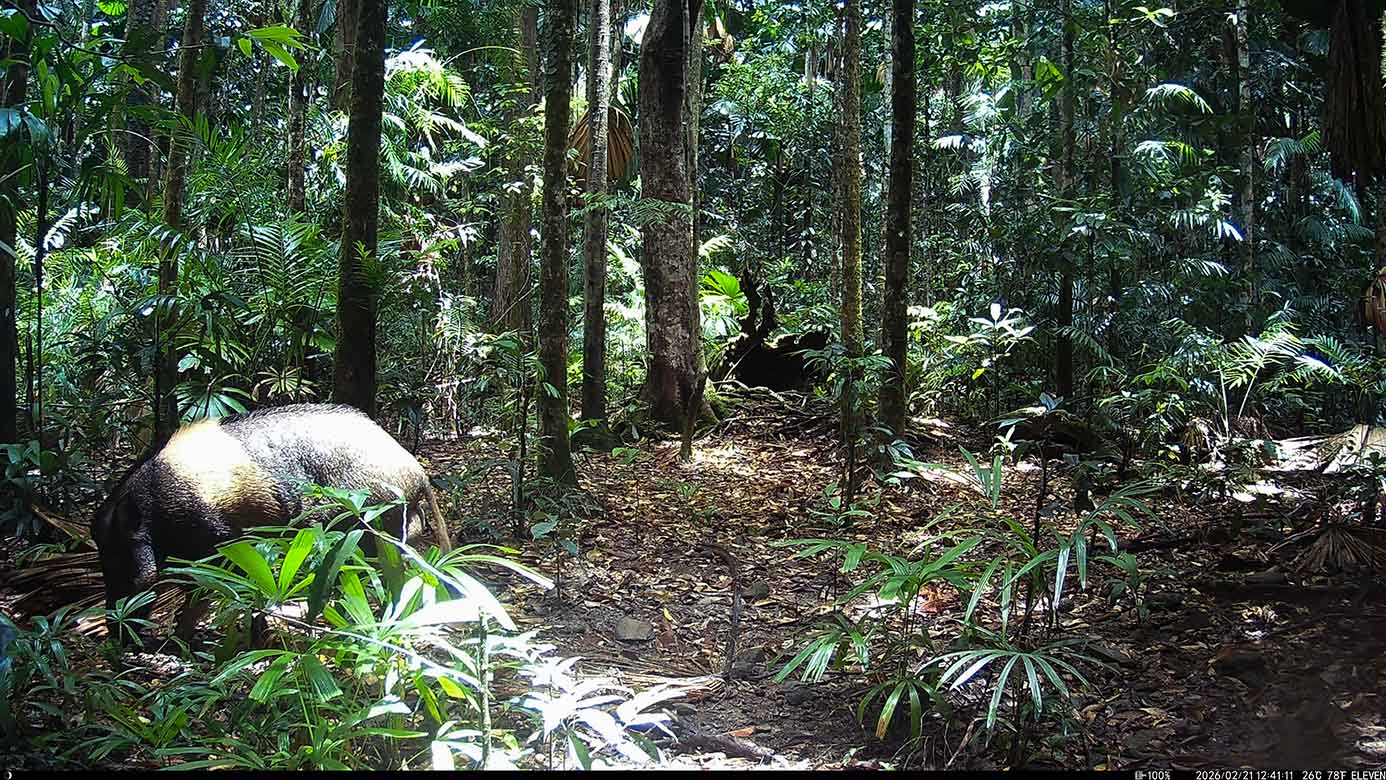
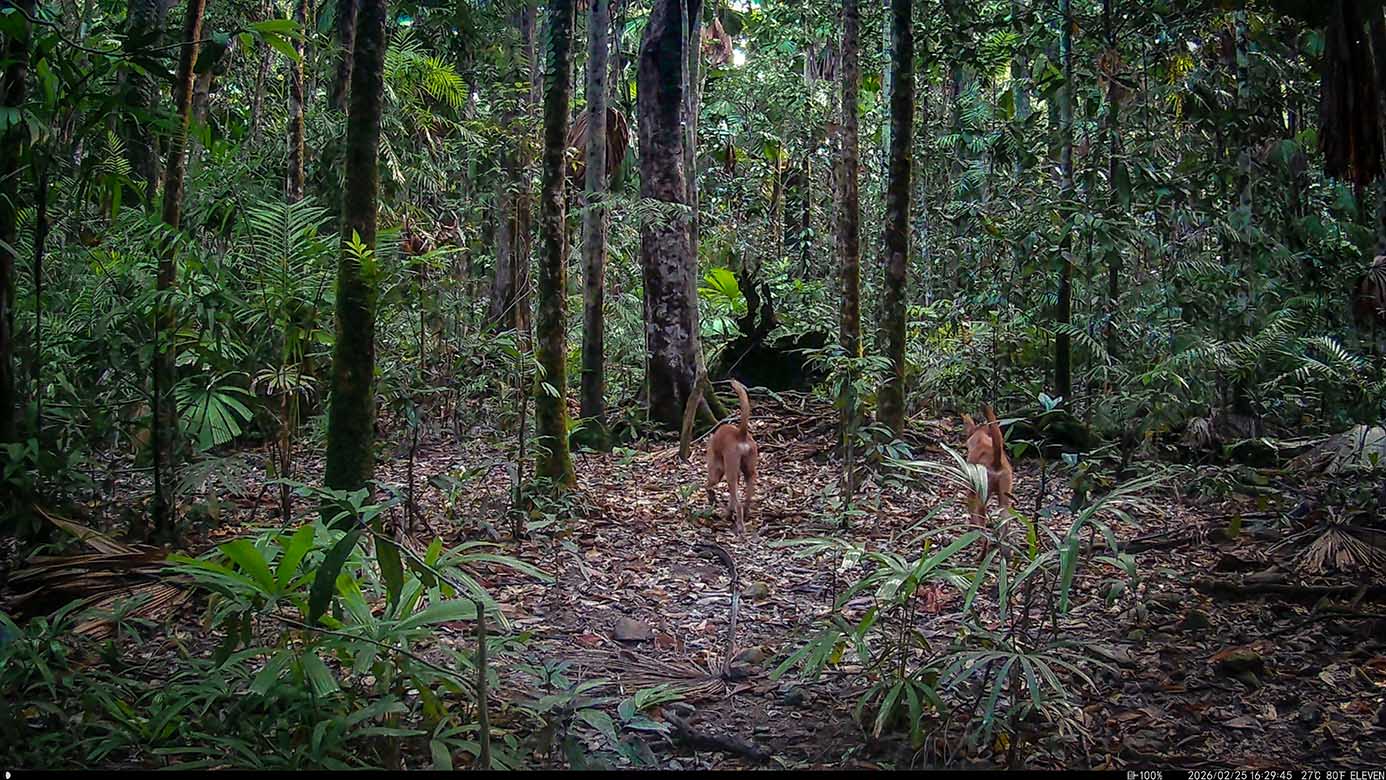
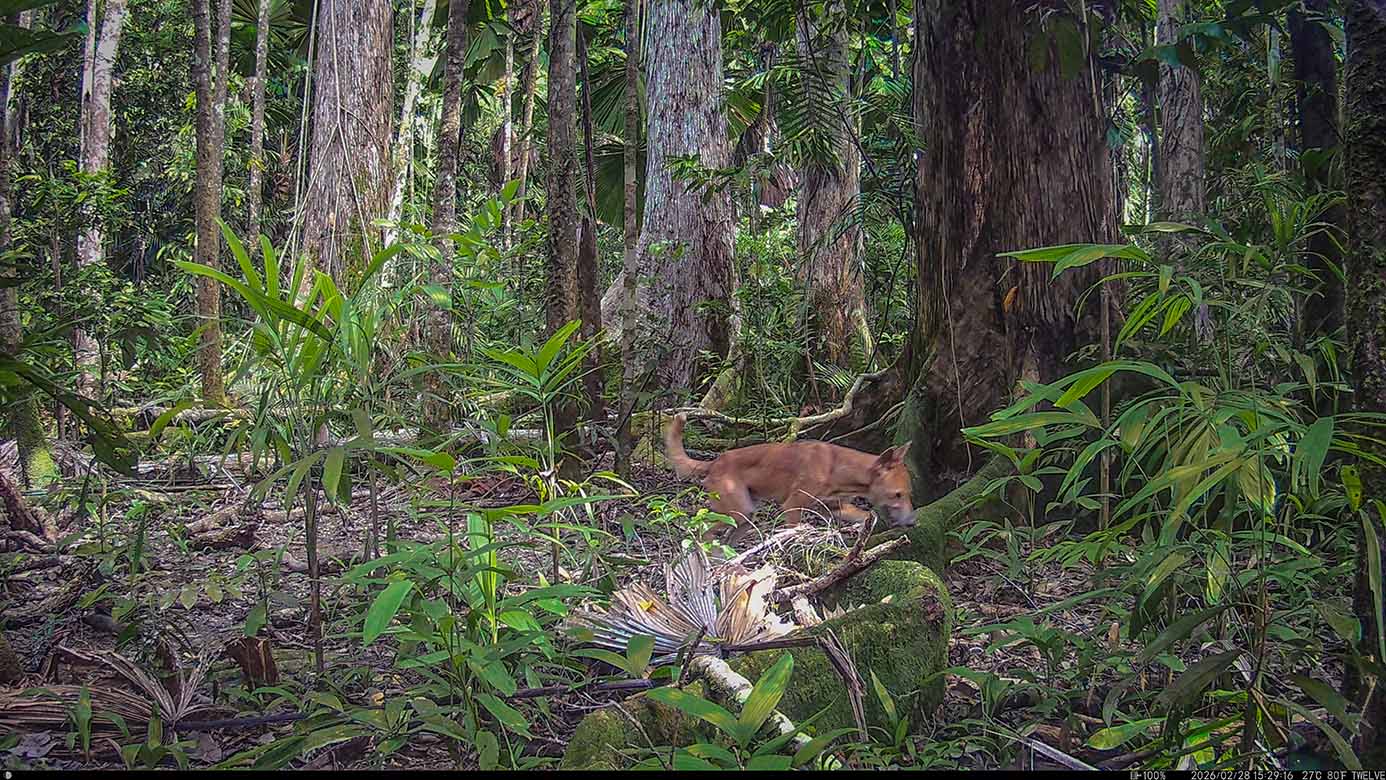
Camera Traps – February 2026 accrued 219-cassowary sightings, 32-dingoes and 131-feral pigs. Against the cumulative monthly average, cassowary numbers rose by 113%, dingoes decreased by 22% and feral-pig numbers also fell by 32%. Against February 2025, cassowary sightings decreased by 11%, dingo numbers diminished by 3%, whereas feral-pigs fell by 24%.
Image highlights from February 2026
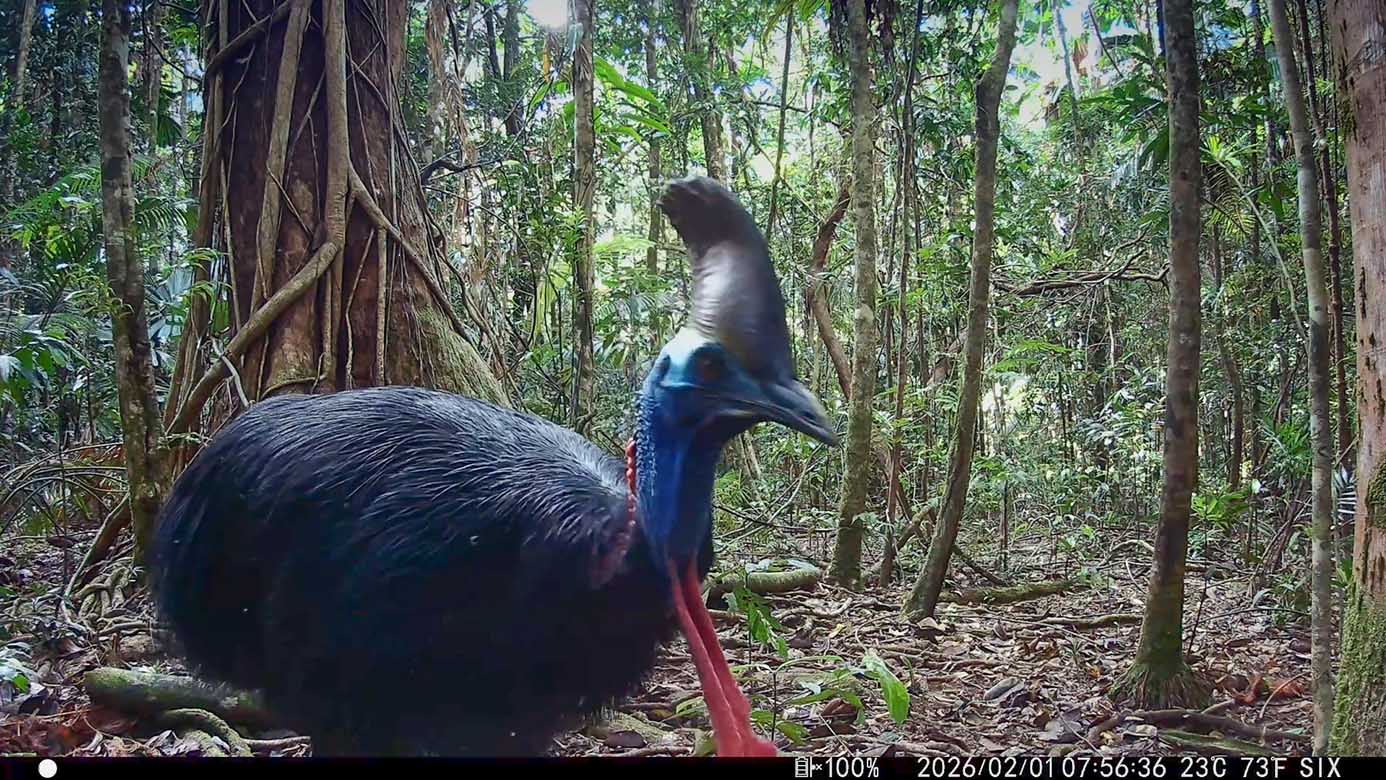
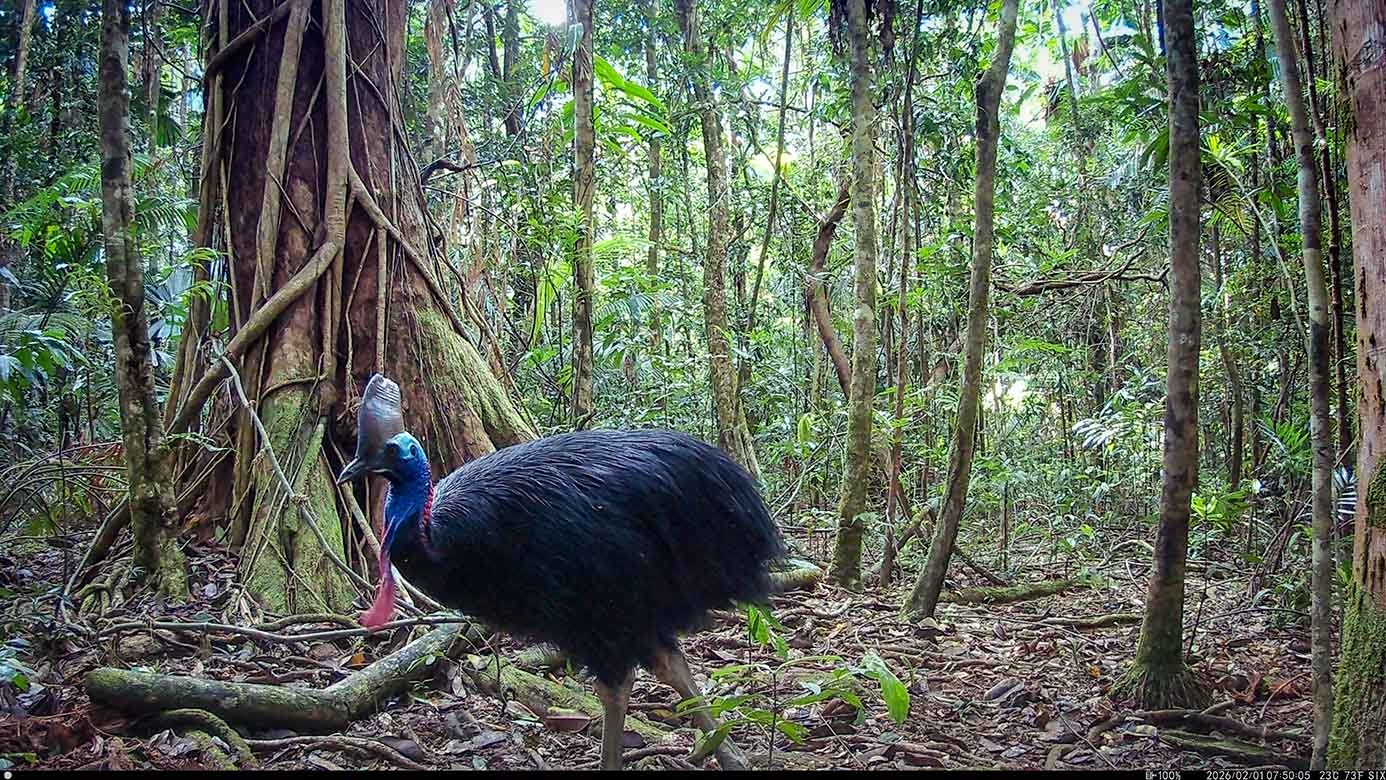
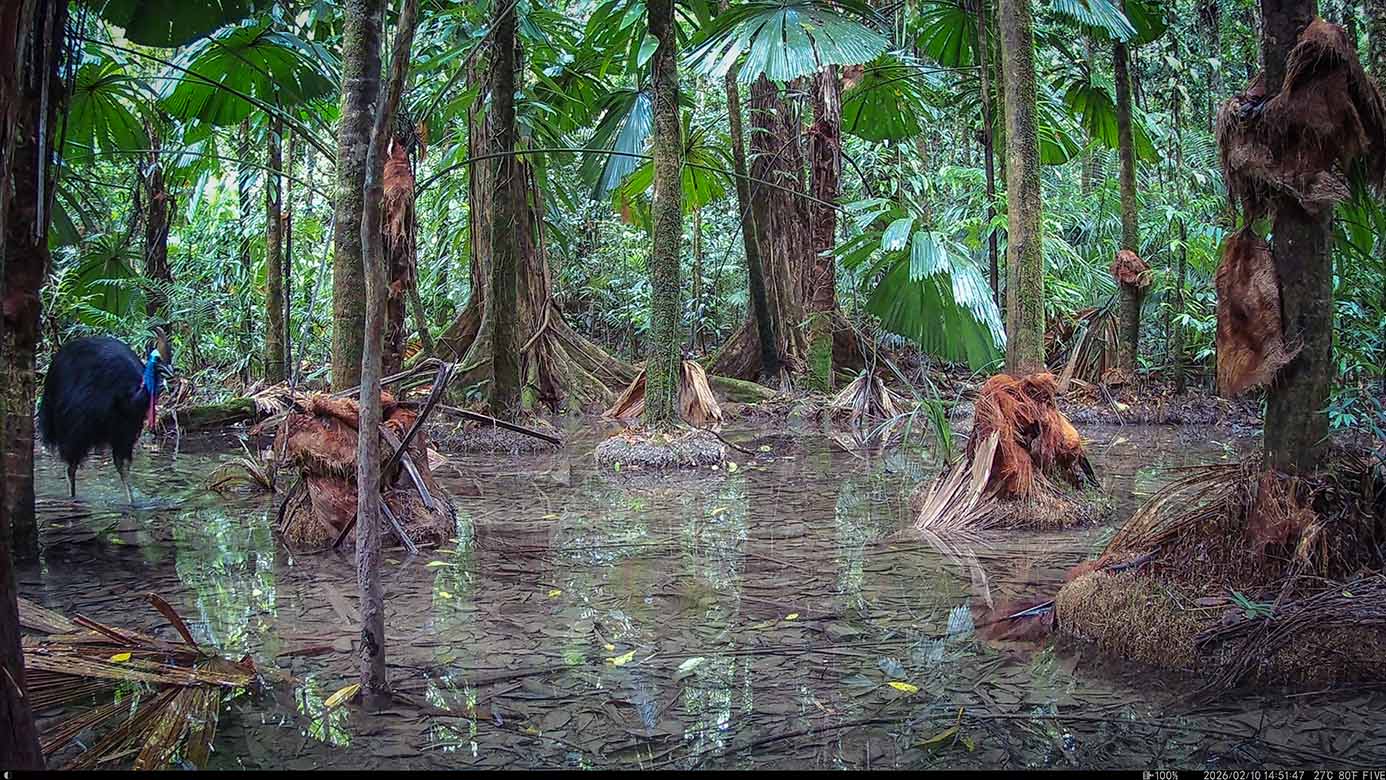
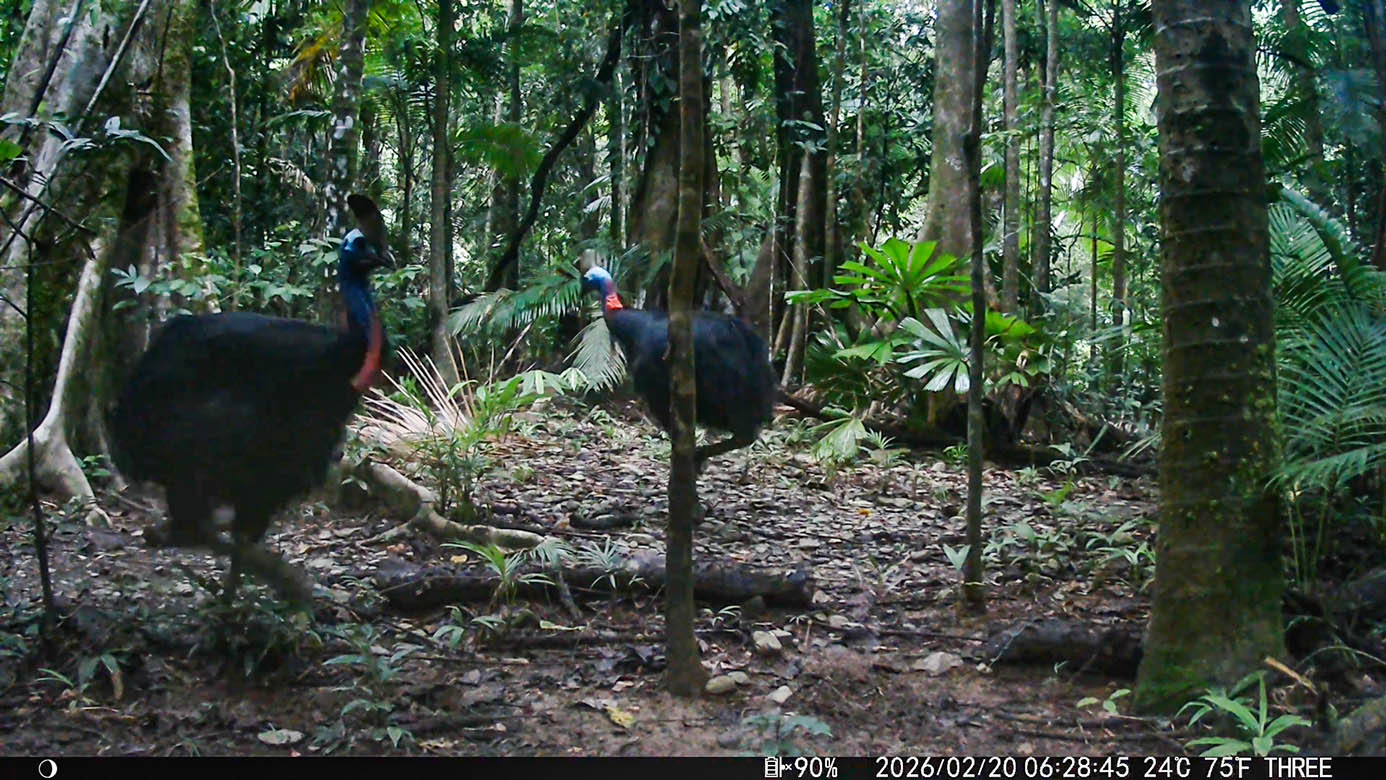
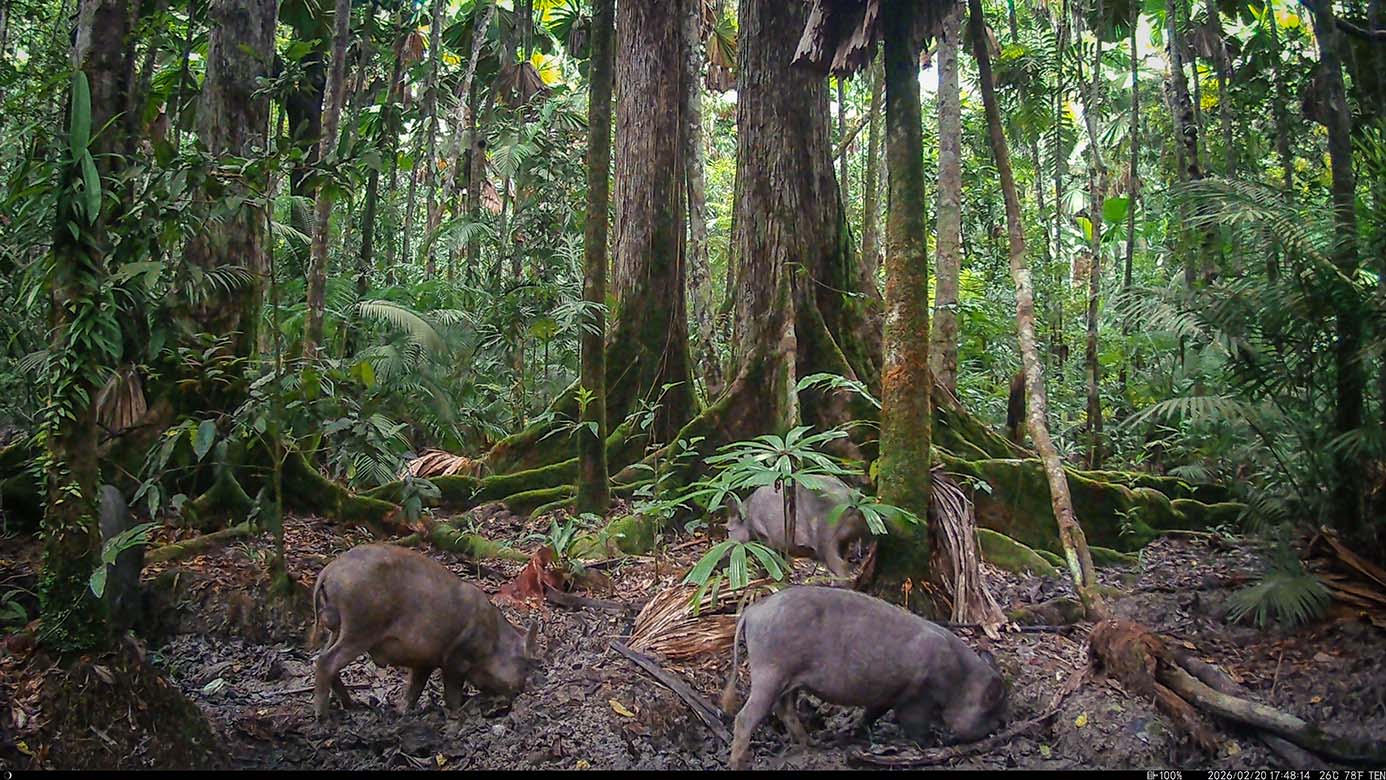
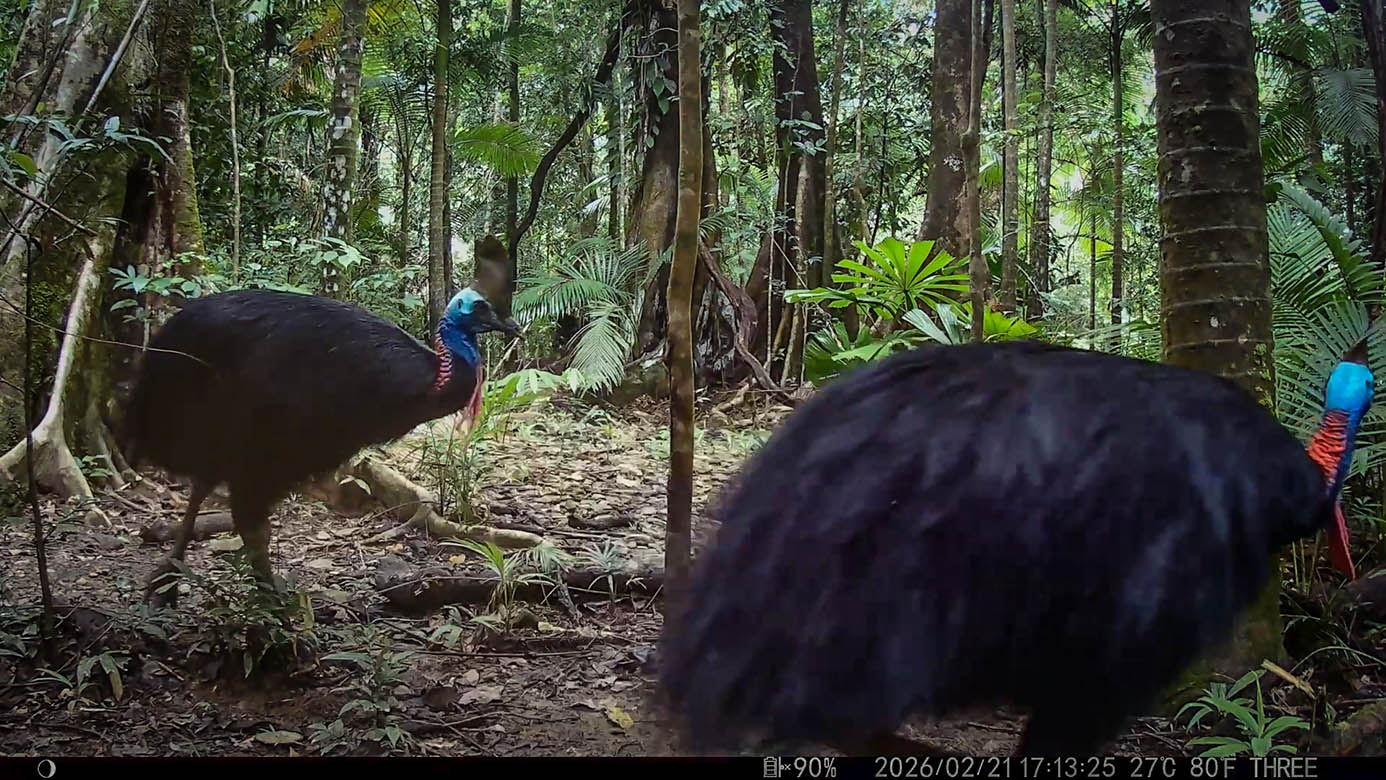
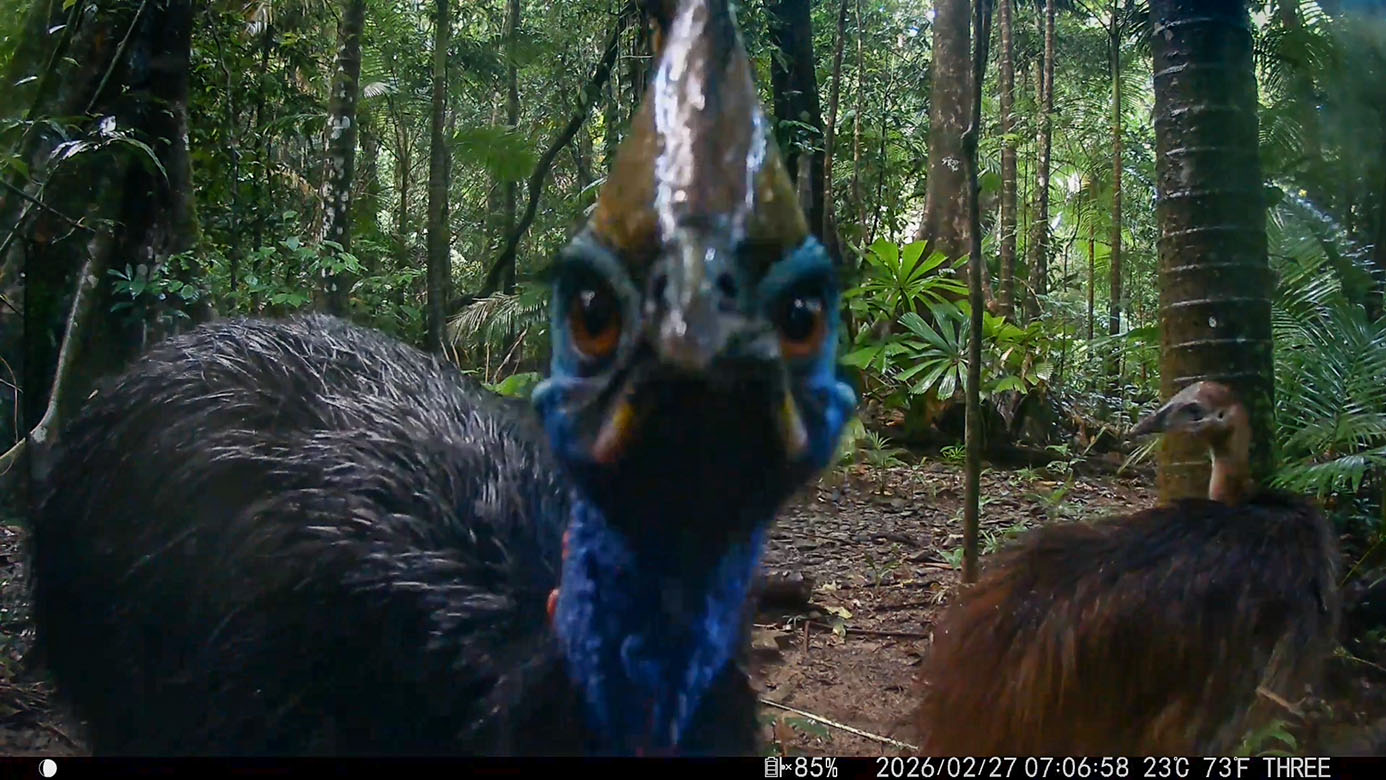
Keeping up with the cassowaries …
Crinkle-Cut & Wobbly
Delilah & Scratch
Splitter & Manu
Daintree Dingoes
One of the core functions of the Queensland Department of Primary Industries (DPI) is protecting our environment, economy, communities and lifestyle from biosecurity risks. On 12th February 2026, DPI invited interested stakeholders to provide feedback on the draft Queensland Feral Pig Management Action Plan 2026–2031.
It is the opinion of the writer of this post, that the draft is doomed from the outset for neglecting two major aspects of the real national feral-pig problem:
1. The ecological removal of Indigenous human inhabitants created vacancies that cultivated feral-pigs and some 72-additional vertebrate species into pestilent proliferation, and
2. The division of pest habitat into ‘reserve’ and ‘off-reserve’ purposes, has turned the former into unintended pest sanctuaries, whilst the latter is regulated to be invasive-species-free.
Australia has some 10,500-conservation reserves, making up 22.5% of the terrestrial landscape and 77.5% of the country is ‘off-reserve’ with landholders burdened with a general biosecurity obligation. The problem is not that the majority of the continental landscape is inadequately regulated for pest-control, but that the magnitude of unintended sanctuary upon the ‘reserve’ portion totally trivialises the country’s investment in pest abatement or eradication.
Feral pigs are not native to Australia, however, escapees from early European settlers have aggregated to some 24-million across about 45% of Australia, adversely affecting at least eighteen listed threatened species. In 2001, the Australian Government listed ‘Predation, habitat degradation, competition and disease transmission by feral pigs (Sus scrofa)‘ as a key threatening process under the Environment Protection and Biodiversity Conservation Act 1999 (EPBC Act), but the ensuing threat abatement plan self-defeatingly concedes,
… it is not possible to eradicate feral pigs from Australia with current resources and techniques and it is unlikely to be possible in the near future, as they are so widely established.
As apex predators, Indigenous human inhabitants were of peak ecological importance to their environment’s health, productivity and security. Unrivalled in their understanding and appreciation of the full complexity of life within their landscapes and across every variation of season, the eviction of the only species of organism to have existed with the intellectual capacity to discharge custodial excellence with spiritual finesse, effectively gave feral-pigs unfettered occupancy under an unintended blanket of legislative protection.
As Queensland feral-pigs are declared invasive animals in categories 3, 4 & 6, they must not be distributed as a gift, sold, traded or released into the environment or be moved or spread into other areas of the State and also, they must not be fed. Under the provisions of the Biosecurity Act 2014, local government is empowered to issue biosecurity orders to landholders who fail to take reasonable and practical measures to manage an invasive biosecurity matter. About 80% of the Douglas Shire is National Park and World Heritage-listed, but how many biosecurity orders has Douglas Shire Council issued to State administrators for allowing feral-pigs to be fed within this majority portion of the shire? Probably none, since the Biosecurity Act binds all persons, but neither the Commonwealth nor a State can be prosecuted for an offence against this Act.
Unless the national pest problem is acknowledged as a product of our own volition, having allowed introduced biota into landscapes historically removed of human inhabitants, beneath the absurdity that ecosystems without human inhabitants can be controlled legislatively, any recovery plan will regrettably be doomed from the outset.
These monthly Camera Trap Reports are made possible by the generous members and donors of the Daintree Rainforest Foundation Ltd, which has been registered by the Australian Charities and Not-for-profits Commission and successfully entered onto the Register of Environmental Organisations. Donations made to the Daintree Rainforest Fund support Daintree Rainforest community custodianship and are eligible for a tax deduction under the Income Tax Assessment Act 1997.